Introduction
Selecting the stone surface for your bathroom vanity is a defining milestone in any renovation. The right choice bridges your design vision with the daily realities of your home.
Two of the most popular premium tops are Quartz and Marble. While both offer distinct beauty, they perform quite differently under the daily demands of a bathroom environment.
This guide evaluates the objective characteristics, material behaviors, and long-term costs of quartz and marble vanity tops to help you select the ideal surface for your space with complete confidence.
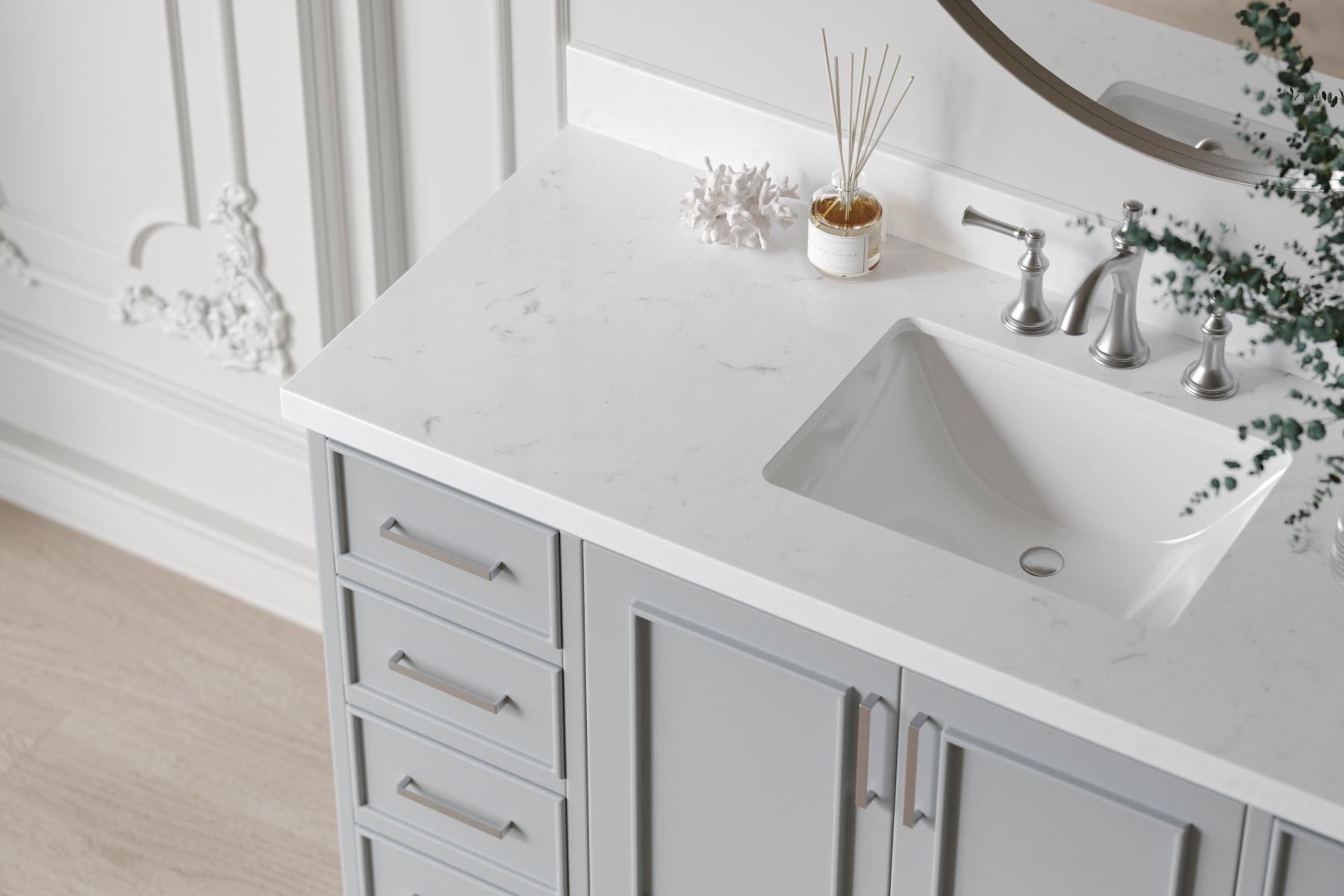
ARIEL Taylor 42 Inch Bathroom Vanity With Carrara White Quartz Countertop In Grey
Quartz vs. Marble Summary Comparison
|
Feature |
||
|
Composition |
~90-93% Crushed Quartz Stone, 7-10% Polymer Resins & Pigments |
100% Natural Metamorphic Limestone (Calcium Carbonate) |
|
Porosity |
Non-porous; entirely sealed during manufacturing |
Naturally porous; contains microscopic voids |
|
Routine maintenance |
Mild soap and warm water; never requires sealing |
pH-neutral cleaners; requires periodic sealing |
|
Stain & acid resistance |
Exceptionally high; impervious to household acids |
Vulnerable to etching from acids (lemon juice, toothpaste) |
|
Scratch resistance |
Very high; highly resistant to standard scratching |
Moderate; prone to fine scratches and abrasions |
|
Heat resistance |
Moderate; vulnerable to temperatures above 300*F (150*C) |
High; naturally handles heat, though thermal shock is possible |
|
Average price range |
Moderate to High (consistent investment) |
High to Ultra-premium (variable by rarity) |
Aesthetics & Design: Choosing the Right Look for Your Vanity
01. Color and pattern
The visual distinction between engineered quartz and natural marble comes down to unique organic character versus precise, structural consistency.
-
Engineered quartz countertops are engineered surfaces composed of natural quartz crystals bound together with resins and pigments. This manufacturing process allows for absolute consistency across slabs. If you love the organic movement of natural stone but prefer predictable patterning, premium engineered surfaces offer an ideal solution.
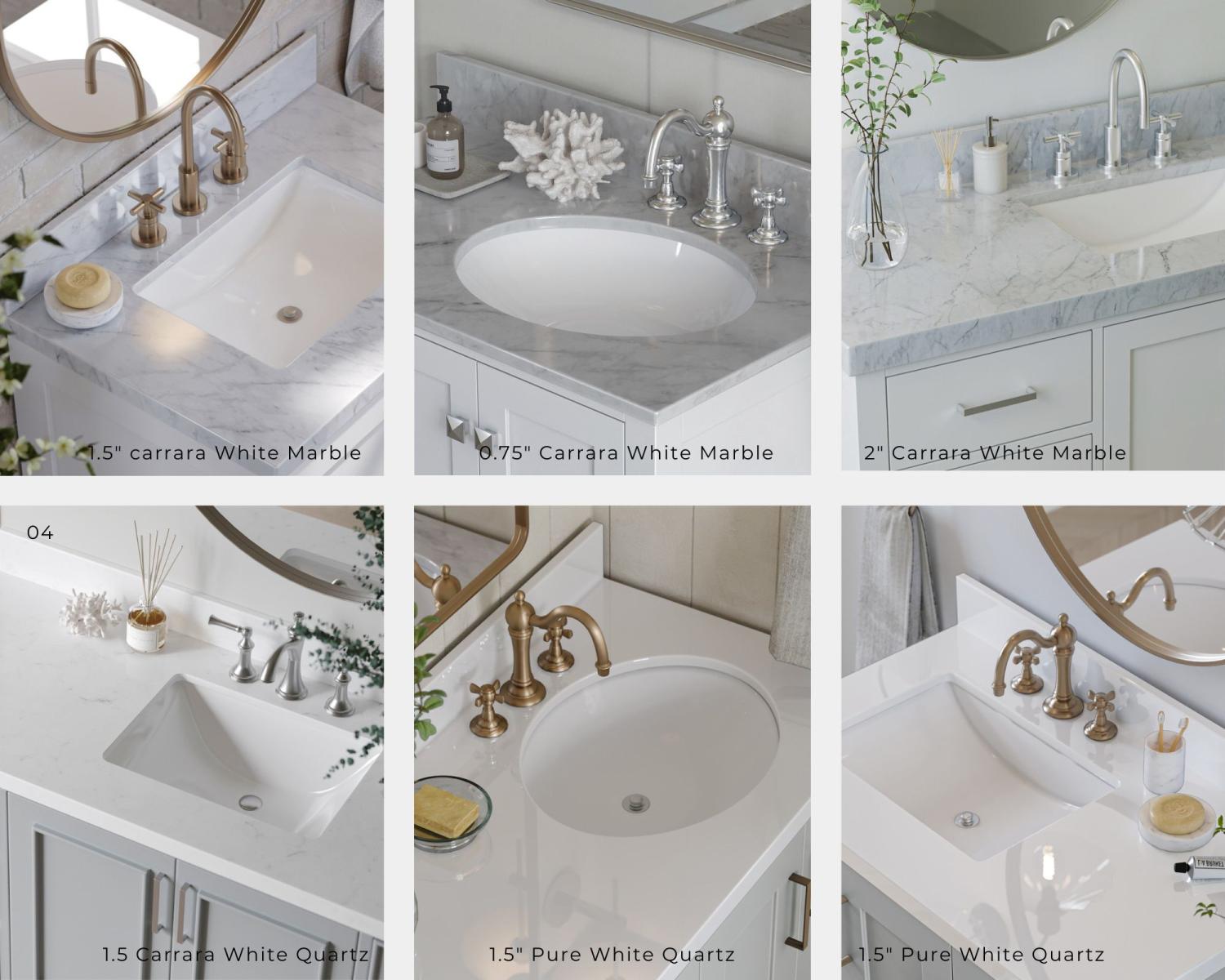
For those seeking targeted design aesthetics, exploring standalone surfaces like the ARIEL Bathroom Countertops collection provides access to highly intentional styles. Within this curated selection, you can find distinct options such as Pure White Quartz for a crisp, minimalist backdrop, Carrara White Quartz for delicate, classic veining, or Nero Marquina Black Quartz for a bold, high-contrast statement piece.
-
Natural marble countertops are authentic natural stone, celebrated for centuries due to its intricate veining and soft, luminous depths. Materials like classic Carrara White Marble showcase rich variations of white and gray tones. Because every slab is quarried from nature, no two vanity tops will ever be completely identical. It provides an unmatched sense of organic sophistication for custom or traditional spaces.
Note: To maintain material integrity and ensure an exact structural match, certain natural stone variations—such as classic Carrara White Marble—are not sold as standalone slabs by ARIEL Bath. Instead, they are exclusively offered as a pre-matched combination with a vanity cabinet and an undermont sink.
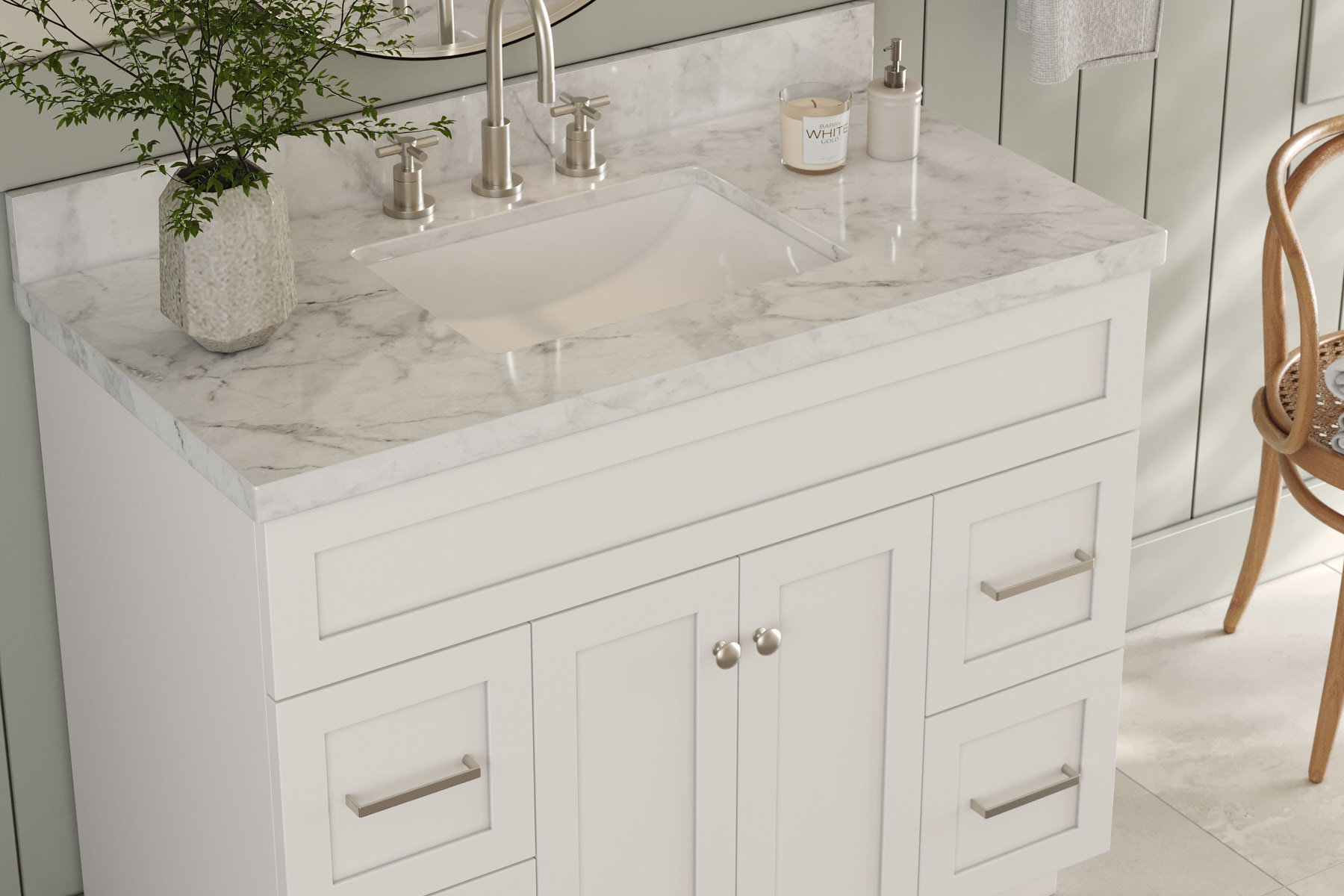
ARIEL Hamlet 43 In. Vanity With Carrara White Marble In White
02. Bathroom theme
Your countertop serves as the anchor for your bathroom vanity ensemble. It interacts daily with your paint colors, hardware finishes, and cabinet wood tones.
-
Marble naturally elevates large, master suites and luxury powder rooms, adding an undeniable architectural weight that coordinates beautifully with both classic polished chrome and contemporary matte black hardware.
-
Quartz surfaces offer a broad, versatile design palette that integrates seamlessly into modern, minimalist, or transitional spaces.
Durability & Daily Life: Performance in the Bathroom Environment
A bathroom vanity is a hardworking surface exposed to high humidity, grooming products, heat from styling tools, and frequent cleaning. Understanding how these stones handle daily wear ensures your investment maintains its integrity over time.
01. Porosity, sealing, and stain resistance
The fundamental differentiator between marble vs quartz countertops lies in their structural porosity:
-
Natural Marble: Marble is inherently porous. If liquids or pigments bypass the surface barrier, they can settle into the stone's microscopic pores, leading to deep stains. Furthermore, marble is highly susceptible to acid etching. When acidic elements—such as citrus-based soaps, certain toothpastes, or cosmetic facial serums—touch the stone, they chemically react with the calcium carbonate, dissolving the finish and leaving a dull, matte mark. To safeguard its appearance, a marble countertop requires regular sealing every 6 to 12 months.
-
Engineered Quartz: Quartz is entirely non-porous. The resin binder seals all internal voids during production, meaning liquids, oils, and pigments cannot penetrate the surface. A quartz countertop naturally resists staining from hair dyes, makeup, and harsh bath products without ever requiring chemical sealants.
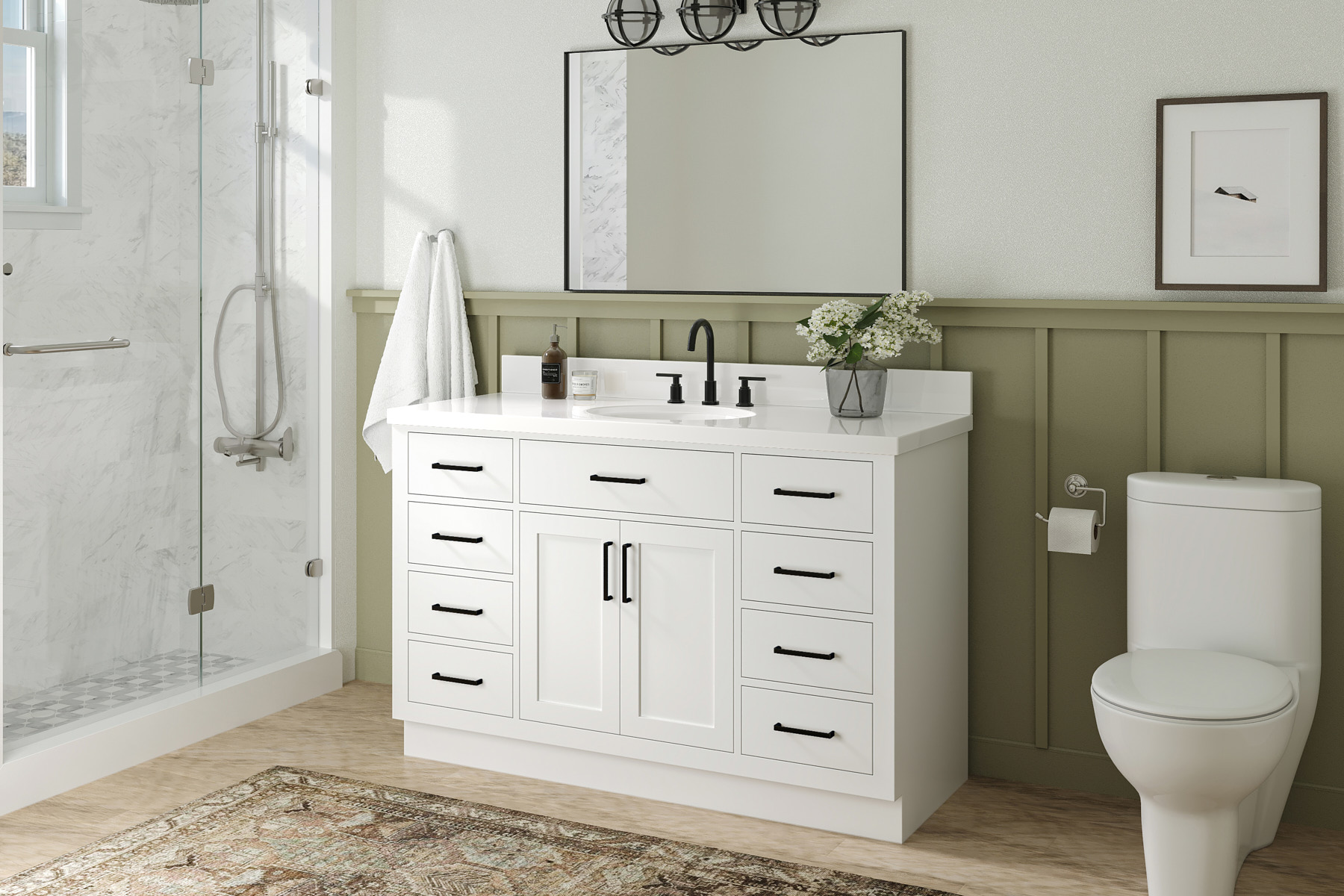
ARIEL Hepburn 55 In. Single Vanity With White Quartz Countertop In White
02. Heat and scratch resistance
-
Scratch resistance: On the Mohs hardness scale, natural quartz ranks at approximately 7, making it incredibly resilient against scratches and structural abrasions. Marble ranks closer to a 3 or 4; it is a softer stone that can be scratched by metal bathroom accessories, jewelry, or heavy glass canisters.
-
Heat resistance: Marble possesses superior natural heat resistance, easily handling warm curling irons. Quartz, while highly durable, is bound by polymer resins that can discolor or warp if exposed to sustained temperatures above 300*F (150*C). Utilizing protective silicone mats under hot styling tools is a simple, effective step to keep a quartz surface pristine.
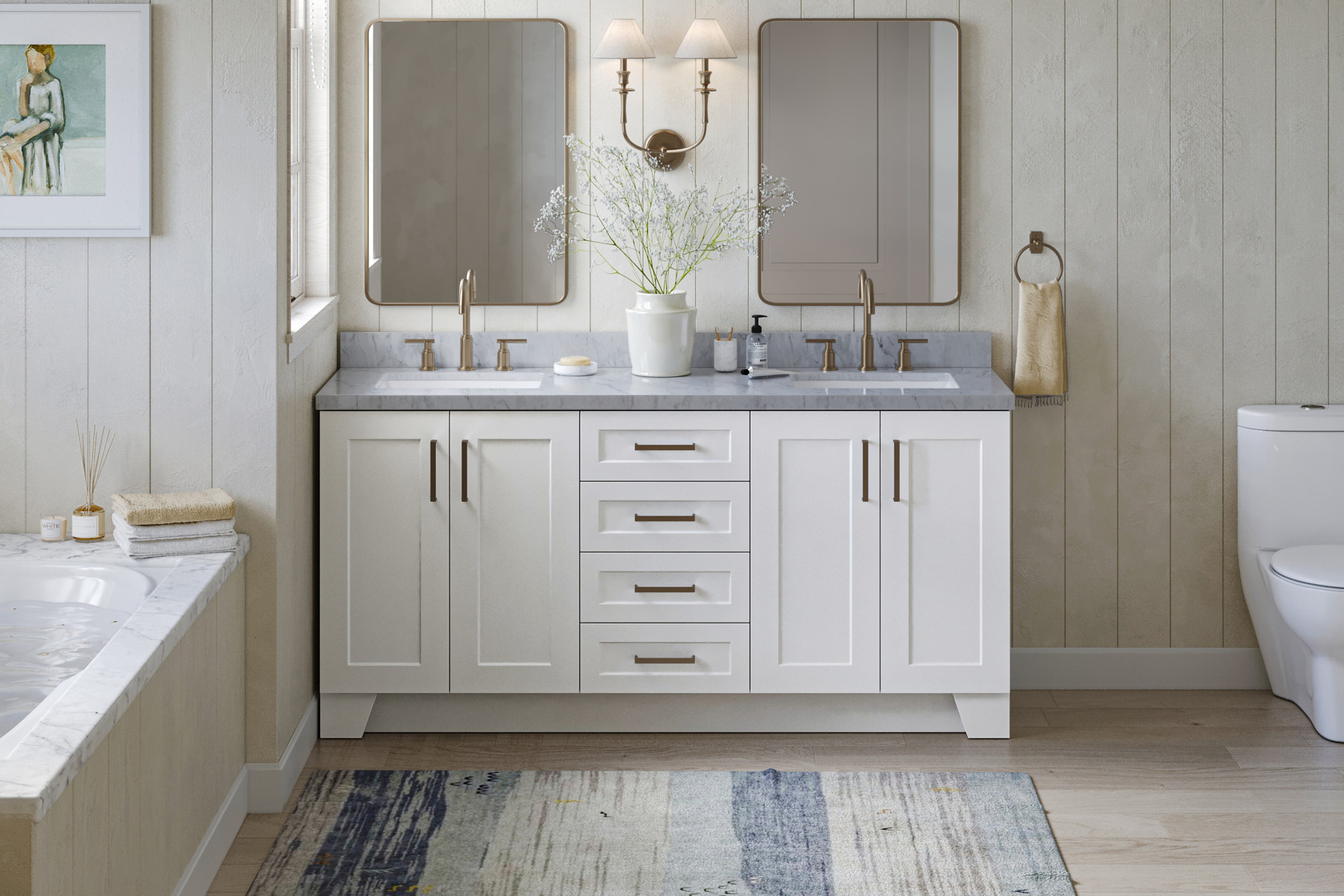
ARIEL Taylor 73 In. Double Vanity With Carrara Marble Countertop In White
Financial Investment: Comparing the Cost of Marble vs. Quartz
When budgeting for your bathroom remodel, assessing the cost of marble vs quartz involves looking at both the upfront purchase price and long-term care requirements.
01. Upfront materials and installation cost
In general comparisons of quartz vs marble price, engineered quartz typically presents a stable, mid-to-high-tier investment. The pricing is highly predictable based on the manufacturer and design pattern chosen.
The upfront cost of marble fluctuates significantly based on rarity, grade, and origin. While entry-level Carrara Marble can be comparable in price to premium quartz, rare varieties like Calacatta or Statuario command a substantial financial premium.
02. Long-term value and upkeep
When analyzing the marble vs quartz cost over time, quartz is highly economical because it eliminates ongoing maintenance costs. It requires no specialized stone cleaners or professional resealing kits.
Marble requires a commitment to routine preventative care, including specialized pH-neutral cleaners and periodic sealing supplies. For homeowners prioritizing low-friction upkeep, quartz delivers exceptional long-term utility.
03. Home resale value
From a home resale perspective, modern homebuyers highly value quartz countertops vs marble for their turn-key convenience, low maintenance requirements, and hygienic, non-porous properties.
Concurrently, authentic marble retains an irreplaceable status in premium, luxury home sectors where custom craftsmanship and natural stone are expected standards.
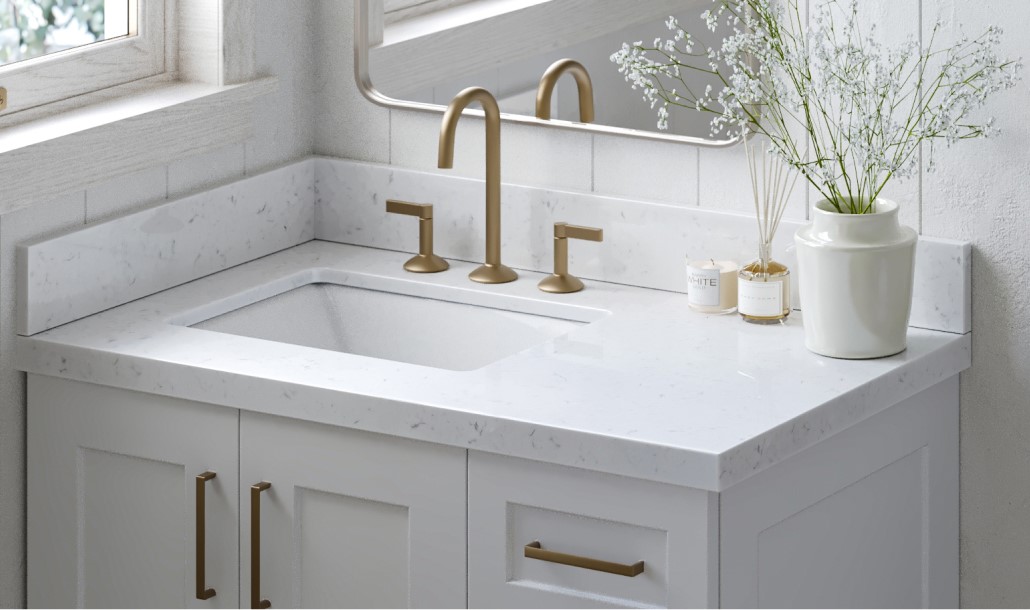
ARIEL Taylor 36 In. Vanity With Carrara White Quartz Countertop In White
Conclusion
Choosing the perfect countertop for your bathroom vanity requires balancing your aesthetic preferences with your daily maintenance expectations. Both materials offer distinct longevity when cared for properly.
By understanding how quartz and marble interact with the unique environment of a bathroom, you can confidently select the surface that best serves your home for years to come.
Frequently Asked Questions
- Q: What are the main differences between marble and quartz countertops for bathrooms?
ARIEL Bath: Marble is a prestigious natural stone valued for its unique, organic veining. However, because it is porous, it requires regular sealing to prevent moisture damage. Quartz is an engineered surface combining natural stone crystals with resin. This makes it entirely non-porous and naturally resistant to stains, scratches, and bacteria without any sealing. - Q: Are marble countertops durable enough for high-humidity bathroom environments?
ARIEL Bath: Yes. Marble performs well in humid environments provided the bathroom has adequate ventilation and the stone is treated with a high-quality penetrating sealer. To prevent water spots and etching, wipe away standing water and grooming products promptly. - Q: Can quartz countertops replicate the authentic look of natural marble?
ARIEL Bath: Excellent alternatives exist. Modern engineering allows quartz to replicate natural stone aesthetics accurately. Varieties like Carrara White Quartz feature soft, realistic gray veining against a crisp white background, offering the classic elegance of marble paired with engineered durability. - Q: What are the main functional advantages of choosing a quartz vanity top over marble?
ARIEL Bath: Quartz offers superior resistance to the daily wear of a bathroom. It resists scratches from styling tools, stains from cosmetics or toothpaste, and moisture absorption. Because it requires zero routine sealing, quartz provides a low-maintenance, hygienic surface ideal for high-traffic family bathrooms. - Q: How do you clean and maintain quartz vs. marble bathroom surfaces?
ARIEL Bath: Quartz: Requires only daily wiping with mild soap, water, or a non-abrasive household cleaner.
Marble: Demands specialized care. Clean with pH-neutral stone cleaners, avoid acidic formulas (like vinegar or citrus), and reapply a protective stone sealer every 6 to 12 months. - Q: Is professional installation necessary for marble and quartz vanity tops?
ARIEL Bath: Professional installation is highly recommended. Both materials are heavy, rigid, and require precise fabrication for undermount sinks and plumbing fixtures. Expert installation ensures accurate leveling, seamless fitting, and prevents structural cracking during transit or placement. - Q: What key factors should guide my choice between a marble or quartz vanity?
ARIEL Bath: Base your decision on your daily lifestyle and maintenance preferences. Choose marble if you prioritize authentic, one-of-a-kind natural beauty and accept routine sealing care. Choose quartz if you want a reliable, high-performance, and stain-resistant surface that simplifies your daily routine. - Q: Can I use these countertop materials in other areas of my home?
ARIEL Bath: Both materials adapt beautifully to applications beyond the bathroom, including kitchen countertops, laundry room folding stations, and fireplace surrounds. Consider the specific traffic, heat exposure, and maintenance needs of each space before selecting your material.