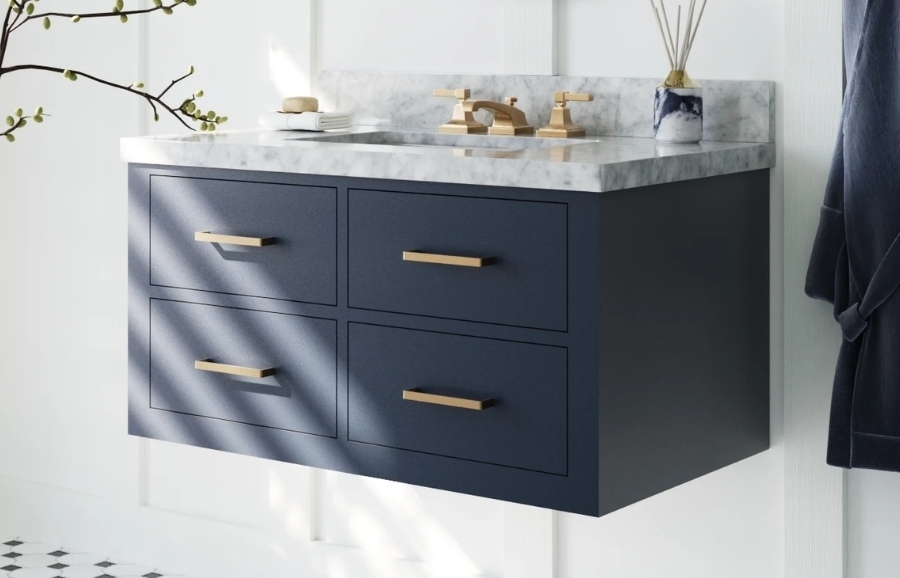
Introduction
Caring for a marble countertop comes down to a simple routine: clean it with mild soap and water, wipe up spills promptly, keep acidic and abrasive products off the surface, and reseal it within the first year.
Marble is a natural stone that looks its best for years when it's protected from etching and stains, and none of that takes special skill. This guide walks through how to clean marble day to day, what to use and avoid, how to handle spills and stains, and how to seal and protect the surface, with a focus on marble vanity tops in the bathroom.

How to Clean Marble Countertops
Clean a marble countertop with warm water and a little mild soap, using a soft cloth. That routine handles everyday dirt and residue without risking the surface. Wipe the top down, then dry it with a clean cloth so water doesn't sit and leave spots.
As needed, you can use a stone spray cleaner or a stone polish made for marble, following the instructions on the bottle or container. Those products are useful for a deeper clean or to refresh the surface, but they aren't required for daily upkeep, plain soap and water is enough most of the time.
What to Use and what to Avoid on Marble
The safest cleaners for marble are mild soap and water or a product made specifically for stone. What damages marble is anything acidic or abrasive, so those are the products to keep away from the surface.
|
Safe to use |
Avoid |
|
Mild soap and warm water |
Acidic cleaners |
|
Soft cloth or microfiber |
Anything with bleach or vinegar |
|
Stone spray cleaner (per instructions) |
Abrasive sponges or rough pads |
|
Stone polish made for marble |
Harsh or abrasive household cleaners |
Acidic and abrasive products are the two most common causes of marble damage. Acids etch the surface, leaving dull marks, and abrasive sponges or rough pads scratch the polished finish. Stick to soft cloths and marble-safe cleaners and the surface stays smooth.

How to Prevent Stains on Marble
The best way to prevent stains is to wipe up liquid spills promptly, before they have time to soak in or etch. Marble is porous, and some liquids with high acidic content can mark the surface if they're left sitting for any length of time.
In a bathroom, the common products to wipe away quickly are the ones you use every day:
-
Rubbing alcohol
-
Nail polish remover
-
Shaving cream
-
Toothpaste
-
Perfume and cologne
-
Hair color
-
Shampoo
-
Drain cleaner
None of these need to cause a problem if they're cleaned up when they land. It's leaving them on the surface that risks staining or etching.

How to Handle a Stain on Marble
For a fresh spill, blot it up promptly with a soft cloth and clean the area with mild soap and water, which stops most stains before they set. Acting quickly is far more effective than trying to remove a stain after it has soaked in.
For a stain that has already set, use a stain-removal product made for stone and follow the manufacturer's instructions exactly, since the right approach depends on the type of stain. Avoid the temptation to scrub with an abrasive pad or reach for a stronger household cleaner, as both can make the damage worse. If a stain won't lift, a stone-care professional is the safest next step.
How to Seal Marble Countertops
Reseal your marble within the first year of purchase to keep its protection intact. An ARIEL marble vanity top is polished smooth and comes with an initial protective sealant already applied, and resealing within that first year maintains the barrier that helps the stone resist stains.
To reseal it yourself:
-
Make sure all areas of the top are clean and dry before you start.
-
Use a high-quality stone sealer, which you can find at your local hardware store.
-
Follow the manufacturer's instructions on the product for how to apply it properly.
A simple way to check whether marble needs resealing over time is the water test: drop a little water on the surface and see if it beads up or soaks in. If it soaks in and darkens the stone, it's time to reseal.
How to Protect Marble from Scratches and Damage
Marble is a fragile stone, so it should never bear excessive weight, don't stand on it or set very heavy objects on top. Beyond weight, the main risk is scratching from hard or rough-bottomed items.
To prevent scratches, place protective pads on the bottom of heavy objects, pottery, or anything else that could drag across and mark the surface. Small felt or rubber pads under decorative pieces are enough to keep the finish smooth.

Where Marble Fits at ARIEL Bath
ARIEL offers marble as a vanity top rather than a standalone top, so marble care here is about looking after the top on your vanity. You can see the Quartz surfact options on the countertops page and browse vanities with a marble top if you're choosing one.
If you're still deciding between materials, our guide on how to choose between quartz and marble countertops walks through the trade-offs.
Caring for ARIEL Carrara White Marble
White and Carrara Marble follow the same care routine as any marble, with one thing to keep in mind: etch marks and stains show more clearly on a pale surface. That makes prompt spill cleanup even more worthwhile on light stone.
ARIEL Carrara White Marble tops are a soft, naturally veined white, so wiping acidic products away quickly and keeping abrasives off the surface is what keeps that clean look. The cleaning, sealing, and protection steps above all apply.
Conclusion
Marble care is straightforward: clean with mild soap and water, wipe spills promptly, keep acids and abrasives off the surface, reseal within the first year, and use protective pads under heavy items. Follow that routine and a marble vanity top holds its polished look for years.
Frequently Asked Questions
-
Q: How do you clean marble countertops?
ARIEL Bath: Use warm water and mild soap with a soft cloth for daily cleaning, then dry the surface. For a deeper clean, use a stone spray cleaner or polish made for marble and follow the product instructions. - Q: What should you not use on marble?
ARIEL Bath: Avoid acidic or abrasive cleaners, anything containing bleach or vinegar, and abrasive sponges or rough pads. Acids etch the surface and abrasives scratch the polished finish. - Q: How much space do you need for an ARIEL double vanity?
ARIEL Bath: You need about 60 inches of vanity width at a minimum for a comfortable double, which usually calls for a wall of roughly 7 to 8 feet once side clearance is included. Below 60 inches, a single sink with a wider counter is the better choice. - Q: Can you use vinegar to clean marble?
ARIEL Bath: No. Vinegar is acidic and will etch the marble, dulling the surface. Use mild soap and water or a marble-safe stone cleaner instead. - Q: How do you get a stain out of marble?
ARIEL Bath: Blot fresh spills promptly and clean with mild soap and water. For a set-in stain, use a stone-safe stain remover and follow the manufacturer's instructions; if it won't lift, consult a stone-care professional. - Q: How often should you seal marble?
ARIEL Bath: Reseal within the first year of purchase, then as needed based on your sealer's guidance. A water test, seeing whether water beads or soaks in, tells you when it's time again. - Q: How do you clean Carrara or White marble?
ARIEL Bath: The same way as any marble: mild soap and water, prompt spill cleanup, and no acids or abrasives. Because etching and stains show more on pale stone, wiping acidic products away quickly matters even more.