Introduction
When designing a small bathroom, maximizing square footage is less about altering physical boundaries and more about optimizing floor visibility and functional layout. Traditional floor-mount cabinetry can visually crowd a confined space, making it feel smaller than its actual dimensions.
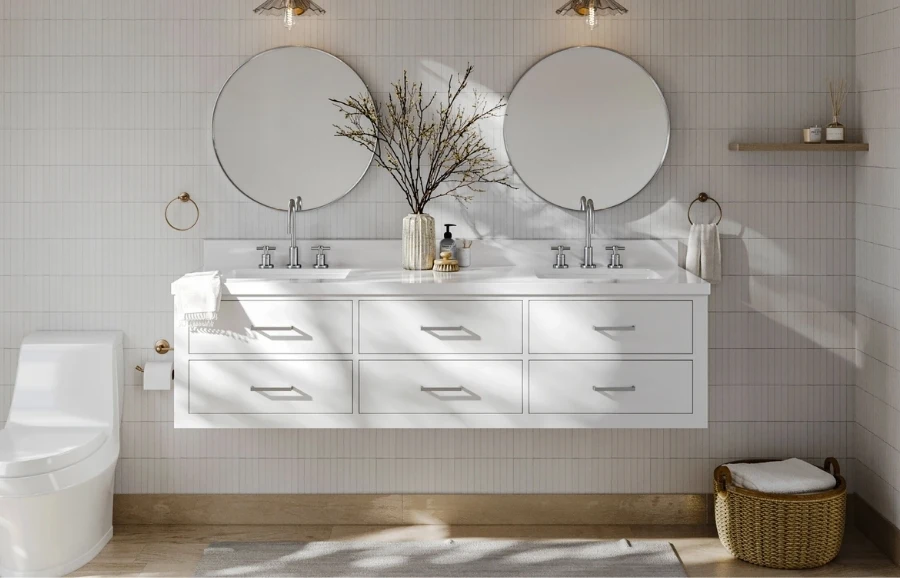
Implementing a floating vanity for small bathroom configurations is an effective architectural technique to create physical clearance and an open aesthetic. By elevating the cabinetry off the floor, you reveal the flooring underneath, which immediately changes the spatial perception of the room.
Let’s explore the benefits of floating vanities, aspects to consider before installing one, and various selections available on the market and here at ARIEL Bath.

ARIEL Lucia 61 Inch Double Oval Sink Floating Bathroom Vanity In Brown Oak
Why a Small Bathroom Floating Vanity Maximizes Space
It is usually difficult to keep items and move around in small restrooms. Clutter may easily accumulate in small rooms, therefore it is essential to make the most of every available space.
A wall-mount (floating) vanity offers distinct advantages over traditional floor-standing cabinetry, particularly when optimizing smaller layouts or creating a refined, contemporary environment.
1. Creates an open and airy feel
Traditional cabinetry acts as a visual anchor, drawing the eye downward and defining the hard boundaries of a room. By elevating the cabinet chassis off the floor, a wall-mount configuration alters how light and space interact within the room.
-
By exposing the flooring continuously from wall to wall, the physical boundaries of the room recede. The eye perceives the entire square footage of the floor rather than stopping at the front edge of a cabinet base.
-
Natural and artificial light can circulate underneath the fixture. This eliminates the dark shadows typical of floor-mounted units, making dark or windowless powder rooms feel instantly brighter and more inviting.
2. Easy to clean underneath
One of the most practical benefits of a floating vanity is the elimination of hard-to-reach crevices where dust, moisture, and hair inevitably accumulate.
-
Without a traditional toe-kick or cabinet base resting on the floor, there are no tight corners or grout lines hidden away from your cleaning routine.
-
Bathrooms are inherently high-humidity environments. Elevating the wood structure away from the floor surface minimizes the risk of standing water pooling around the base of the cabinetry - protecting your investment from premature warping or finish degradation.
-
Standard floor mops, vacuums, and robotic cleaning devices can pass completely beneath the unit without obstruction, keeping your bathroom floor truly hygienic with minimal physical effort.
3. Offers a modern and sleek aesthetic
A wall-mount vanity is an intentional style choice that brings clean lines and architectural simplicity to the forefront of your design.
-
The suspended profile emphasizes horizontal lines and structural balance. This minimalist form eliminates visual clutter, allowing high-quality materials - such as natural wood grains, polished quartz, or matte finishes - to stand out.
-
While naturally suited for ultra-modern or European-inspired spaces, a floating design also complements transitional interiors. It acts as a subtle, sophisticated bridge between traditional warmth and contemporary clarity, giving you the freedom to evolve your decor over time.

ARIEL Hutton 72 In. Double Sink Floating Wall Cabinet In Grey
Selecting the Best Floating Vanity for Small Bathroom Configurations
Finding the best floating vanity for small bathroom layouts requires balancing the physical dimensions of the cabinet with your actual daily routine.
1. Size matters
When integrating a floating vanity into a smaller layout, exact measurements prevent the space from feeling cramped or obstructing natural traffic flow. While standard wall mount vanities are engineered in a wide spectrum of widths, small-scale spaces require careful selection from the more compact options:
-
24 to 31 inches: Ideal for powder rooms or secondary guest bathrooms. This footprint maximizes floor visibility while providing sufficient countertop area for daily essentials.
-
36 to 37 inches: A versatile mid-size option that offers an expanded workspace and deeper internal storage without crowding standard plumbing lines.
-
42 to 48 inches: The upper limit for small-to-medium full bathrooms. This size allows for larger drawer configurations, provided there is adequate clearance for doors and shower entries to open fully.
Planning note: Always measure the plumbing rough-in locations before finalizing your vanity width. Because wall mount units expose the space beneath them, the incoming water supply and waste lines must align cleanly within the cabinet chassis.
2. Material options
Small bathrooms inherently trap moisture and humidity more rapidly due to lower air volume. Selecting a material that maintains structural integrity under these conditions ensures long-term reliability.
|
Option |
Characteristics |
Small Bathroom Suitability |
|
Engineered Wood (Plywood/MDF) |
Highly stable; engineered to resist expanding and contracting when exposed to ambient moisture and steam. |
Provides a flat, uniform surface for paint or veneers while minimizing moisture-related warping. |
|
Solid Wood |
Exceptional structural integrity and natural grain variation; requires proper sealing to protect against ambient dampness. |
Brings organic warmth to a space, but requires adequate bathroom ventilation to maintain its finish over time. |
|
Acrylic and Composites |
Non-porous, lightweight, and completely impervious to standing water, scratches, and common stains. |
Sleek and easy to clean, making it a highly practical choice for frequently used guest baths. |
More specifically, ARIEL Bath floating vanities are crafted with a solid wood frame, providing superior resistance to warping in high-humidity zones.
3. Style and design:
The aesthetic treatment of your vanity directly influences how spacious the room feels. Rather than overwhelming a small bathroom, the right style can create a sense of intentionality and openness.
-
Minimal vanities: Clean lines, simplicity, and neutral colors define minimalist bathroom vanities, focusing on functionality and efficient use of space.
-
Contemporary vanities: Modern aesthetics with sleek finishes and innovative design elements characterize contemporary bathroom vanities, blending sophistication with inviting style.
-
Bold vanities: Vibrant colors, intricate patterns, and adventurous design choices make bold bathroom vanities stand out, adding personality and flair to the space.
 ARIEL West 73 Inch Double Oval Sink Floating Bathroom Vanity In Mocha
Smart Storages under a Floating Vanity for Small Spaces
1. Utilizing space underneath the vanity
A floating vanity inherently opens up valuable floor real estate. To maintain a clean visual profile while keeping daily essentials accessible, consider utilizing the open area beneath the cabinet base.
Woven storage baskets or minimalist linen bins slide neatly underneath, providing an intuitive home for extra towels or cleaning supplies without disrupting the room’s open feel.

ARIEL Hutton 60 In. Double Sink Floating Wall Cabinet In White
2. Adding drawer dividers for more organization
True functionality is found in the details. Integrating tailored drawer dividers into your vanity configuration transforms deep drawers into highly organized compartments.
By designating specific zones for toiletries, cosmetics, and grooming tools, you streamline your morning routine and eliminate the clutter that often gathers in shared bathroom spaces.

Conclusion
Overall, a floating vanity is a versatile and helpful addition to any small bathroom. A floating vanity may transform a congested bathroom into a fashionable and functional retreat by optimizing space, providing storage solutions, and increasing aesthetics.
To get the most out of this space-saving alternative, consider your specific needs when it comes to looks, usage, and installation.
Frequently Asked Questions
-
Q: Does a floating vanity save actual physical space in a small bathroom?
ARIEL Bath: While a floating vanity occupies a similar depth and width to a traditional freestanding model, it saves valuable visual space and physical floor real estate. By elevating the cabinet, it exposes the floor completely from wall to wall, which makes a compact room feel significantly larger, lighter, and less restricted. -
Q: How does a floating vanity help make a small bathroom look bigger?
ARIEL Bath: A floating vanity makes a small bathroom feel larger by elevating the cabinet chassis off the floor to continuously expose the flooring from wall to wall. This visual openness tricks the eye into perceiving the room's full square footage rather than stopping at a traditional cabinet base. Additionally, allowing natural and artificial light to circulate underneath eliminates dark shadows, instantly making a compact space or powder room feel brighter and more open. -
Q: What is the best material for a floating vanity in a small, damp bathroom?
ARIEL Bath: Materials engineered to handle high humidity are ideal. Look for vanities constructed with solid wood frames or premium moisture-resistant plywood underlays. These materials resist the warping, expanding, and contracting that can occur over time due to steam and ambient humidity. -
Q: Do floating vanities have less storage capacity than freestanding units?
ARIEL Bath: Because a floating vanity sits higher off the floor, it typically loses the bottom few inches of cabinet space compared to a full-height unit with a toe-kick. However, this is easily offset by choosing smart internal drawer layouts, integrated plumbing cutouts, or by placing decorative storage baskets underneath the unit. -
Q: How do ARIEL floating vanities hold up against high bathroom humidity?
ARIEL Bath: Small bathrooms trap moisture and steam rapidly due to lower air volume, making material choice vital for long-term reliability. ARIEL floating vanities are engineered with a solid wood frame, which provides exceptional structural integrity and superior resistance to warping or finish degradation in high-humidity zones. -
Q: Can you add storage underneath a floating vanity without making the bathroom look cluttered?
ARIEL Bath: Yes. To maintain a clean visual profile while keeping daily essentials accessible, the open area beneath the base can be utilized for intentional, low-profile storage. Sliding woven storage baskets or minimalist linen bins neatly underneath provides an intuitive home for extra towels or cleaning supplies without disrupting the room's open, airy feel. -
Q: What are the best ways to keep the deep drawers of a bathroom vanity organized?
ARIEL Bath: To prevent clutter from gathering in shared bathroom spaces, deep vanity drawers can be optimized with tailored drawer dividers. Designating specific structural zones for toiletries, cosmetics, and grooming tools streamlines your morning routine and ensures everything remains functional and easy to locate.