Introduction
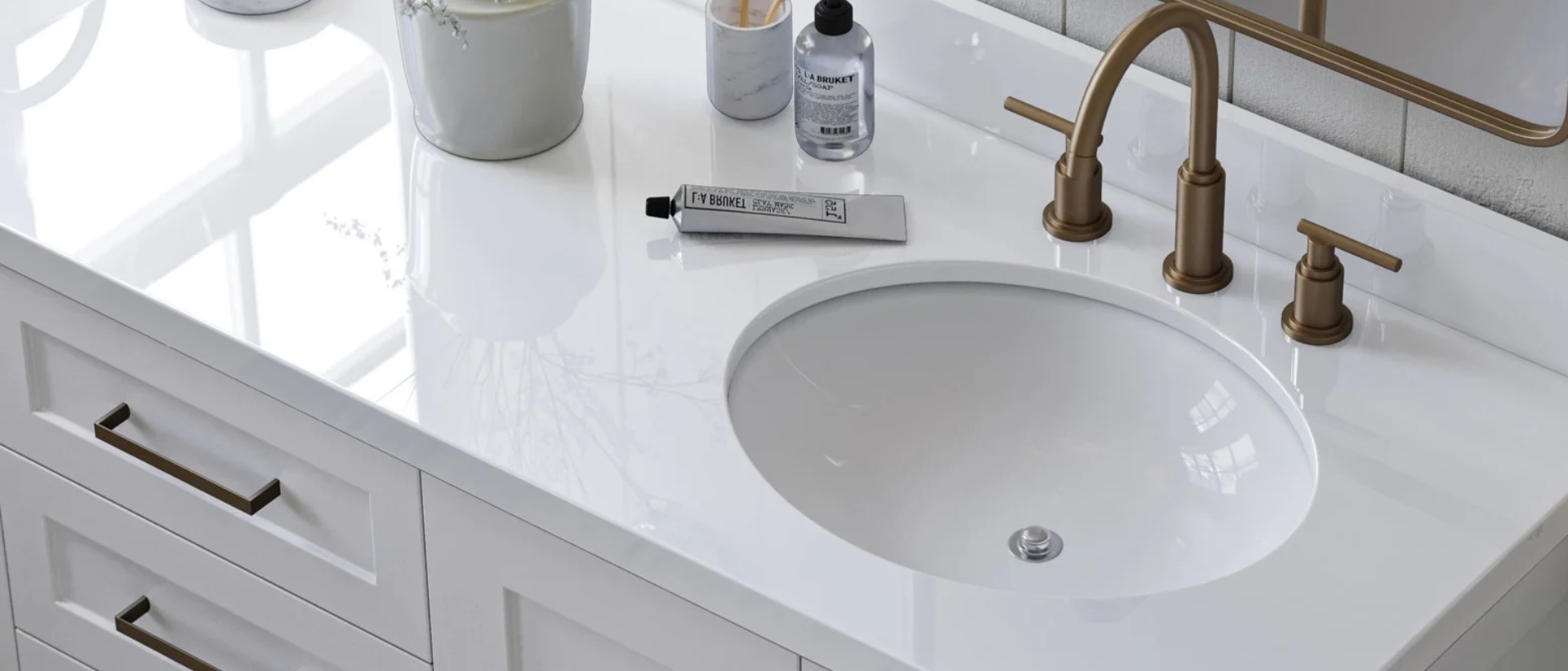
Choosing the right bathroom vanity involves balancing aesthetics with daily practicality. If you are considering a renovation, you have likely encountered the option of an undermount sink. Unlike traditional drop-in models, an undermount sink mounts directly beneath the countertop, offering a clean, unobstructed profile.
While this setup is highly favored for contemporary homes, understanding both its benefits and structural requirements will help you determine if it fits your lifestyle and bathroom layout perfectly.
What is an Undermount Sink?
An undermount sink is installed entirely below the countertop surface, eliminating the raised rim typical of top-mount or drop-in sinks. This creates a completely seamless transition from the stone top directly into the basin.
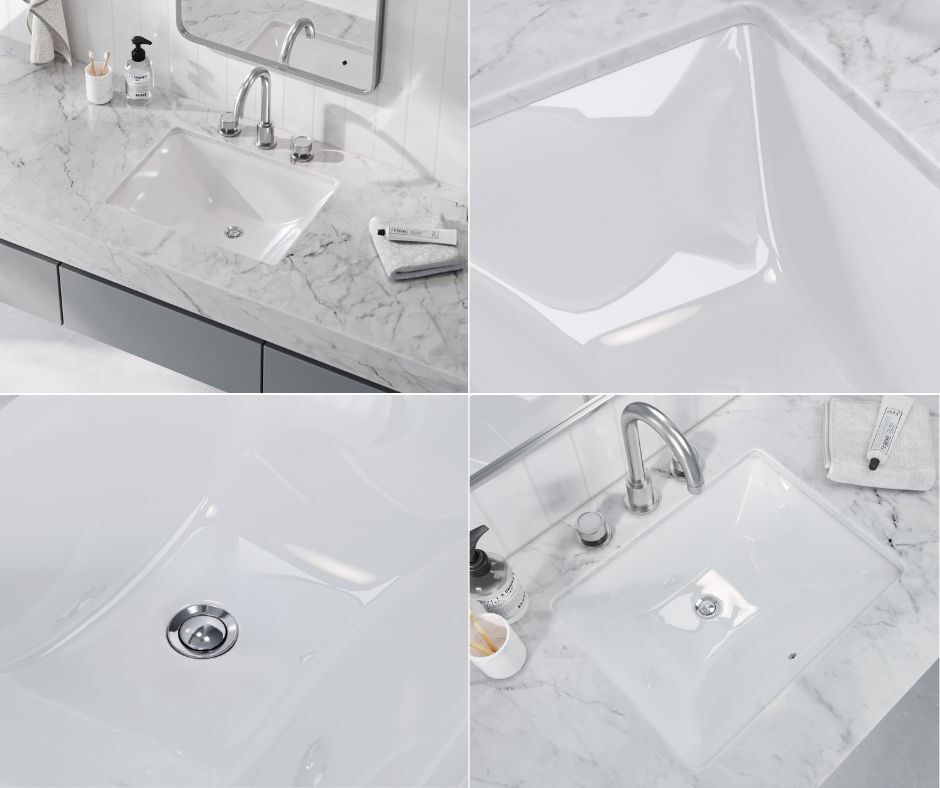
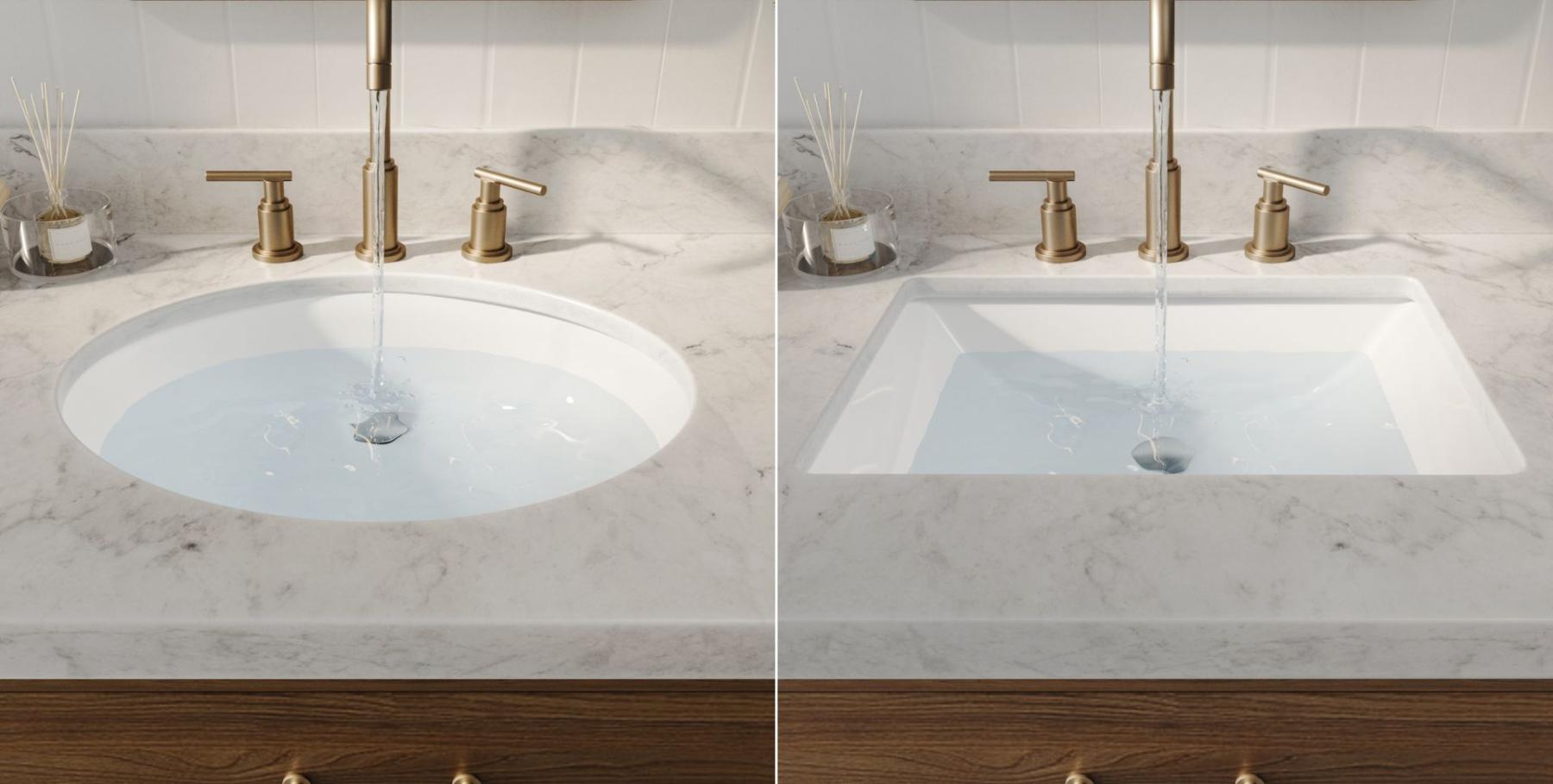
Visually, this design emphasizes the natural beauty of your countertop material. Models such as the ARIEL Oval Undermount Sink offer a soft, timeless appeal, while the ARIEL Rectangular Undermount Bathroom Sink provides a sharp, architectural look suited for modern spaces. Because the rim is hidden, the focus remains entirely on clean lines and quality craftsmanship.
Summary: Pros and Cons of Undermount Sinks
| Pros (Advantages) |
Cons (Disadvantages) |
|
Creates an uninterrupted, premium look that highlights the beauty of natural stone or quartz. |
Unsuitable for laminate or tile; must be paired with solid, non-porous surfaces. |
|
The lack of a raised rim allows you to wipe water and debris straight from the counter into the basin. |
Requires professional fabrication for the precise stone cutout and specialized installation. |
|
Eliminates the top lip, giving you more usable flat surface area right up to the edge of the sink. |
Heavy usage or improper anchoring can cause the sink to separate from the stone top over time. |
|
Eliminates the typical crevices where grime, mold, and soap residue accumulate around a traditional rim. |
If the sink chips or cracks, replacing it often requires matching the exact footprint or replacing the countertop. |
Benefits of an Undermount Sink for your Bathroom Vanity
1. Seamless design
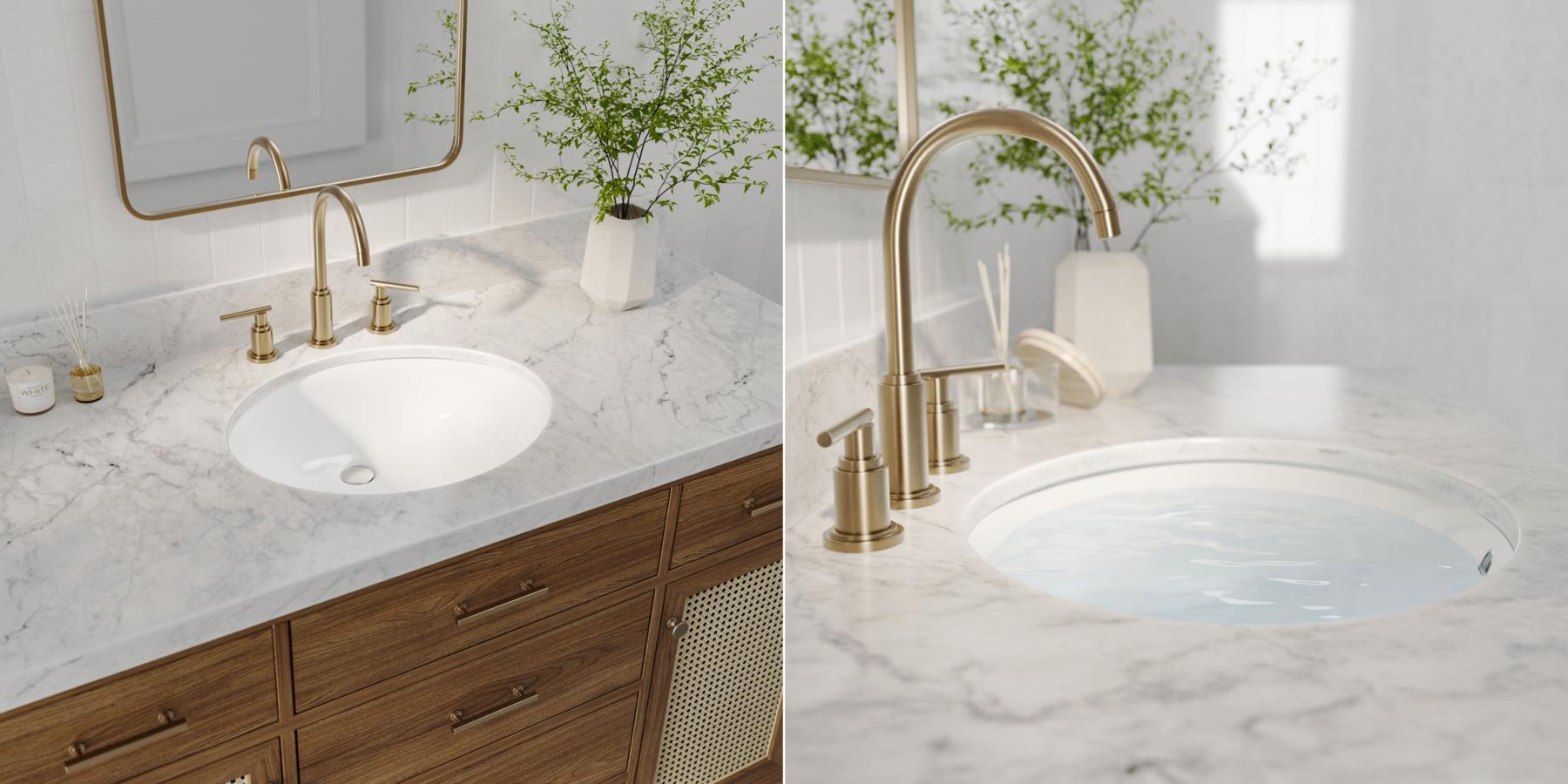
The primary visual appeal of an undermount design is its minimalist profile. By extending the countertop material directly to the edge of the basin, the vanity achieves a continuous, integrated look. This closely mimics the upscale, tranquil atmosphere of a luxury spa, elevated by uninterrupted stone surfaces.
2. Easy to clean
Without an exposed lip or rim above the counter, there are no crevices where grime, mildew, or soap residue can accumulate. Routine cleaning becomes remarkably simple: you can wipe water, dust, and countertop debris straight into the basin with a damp cloth, significantly improving day-to-day bathroom hygiene.
3. Maximized counter space
Every inch of surface area matters during a morning routine. Because the mounting hardware and rim are hidden beneath the counter, you gain a precious flat surface right up to the sink’s edge. This added space is a distinct advantage whether you are organizing a compact powder room or sharing a double-sink master bath.
4. Durability and maintenance
These sinks are often made from durable materials like stainless steel, porcelain, or composite stone, ensuring longevity and easy maintenance. Choosing a high-quality undermount sink can provide a long-lasting, stylish addition to your bathroom.
Common Undermount Sink Problems to consider
1. Specific countertop material requirements
Undermount sinks expose the raw, cross-sectional edge of the countertop cutout. Because this edge is constantly subjected to water splashing, it requires a completely solid, non-porous material.
Solid stone surfaces like Quartz, Granite, and Marble excel here. Conversely, Laminate or Tile countertops are unsuitable; moisture will eventually seep into the raw wood substrate underneath, causing the materials to swell and delaminate.
2. Higher initial cost and professional installation
Achieving a seamless rimless surface demands precision. The countertop must be professionally cut and polished to match the exact dimensions of the basin.
Additionally, the installation process requires heavy-duty structural anchoring to support the basin's weight when filled with water, resulting in higher initial fabrication and labor costs compared to basic drop-in units.
3. Weight stress and support failures
Because gravity naturally pulls an undermount sink downward, an incorrect installation can cause the sink to separate from the stone top over time. The weight of a heavy porcelain basin, combined with a full volume of water, puts constant stress on the adhesives.
Ensuring the basin is mechanically anchored rather than relying solely on silicone sealant is essential to prevent shifting or structural failure.
ARIEL Bath Undermount Sink Installation Process
To eliminate uncertainty and protect your investment, ARIEL vanities utilize a clear, highly secure methodology for undermount sink installation, applicable to both oval and rectangular sink models.
De-risking the process comes down to using the correct mechanical fasteners rather than relying strictly on sealants
A proper installation requires four core components:
-
Undermount clips: Heavy-duty brackets that secure the sink basin by anchoring into threaded bolt holes on the underside of the stone.
-
Bolts & wing nuts: Threaded hardware used to tighten and tune the upward pressure on the basin rim.
-
Washers: Included to ensure an even distribution of pressure when attaching the clips.
-
Silicone glue: A heavy amount of waterproof silicone applied specifically to the top side of the sink basin edge.
Here is the step-by-step installation guide for both ARIEL oval and rectangular undermount sink:

For a complete visual walkthrough, homeowners and installers can reference the step-by-step instructional videos available on the ARIEL Bath YouTube channel.
How To Install A Rectangle Sink
Choosing the Right Undermount Sink Vanity
Selecting the perfect undermount sink vanity involves several key considerations:
-
Material: Ensure the countertop material is compatible with an undermount sink. Stone, quartz, and solid surface materials are excellent choices.
-
Size and depth: Choose a sink size that fits your needs and the scale of your bathroom. A deeper sink can be useful for minimizing splashes and accommodating various uses while a shallow sink bowl can be a great choice for smaller vanities with less space.
At ARIEL Bath, we offer a variety of high-quality sinks, including the ARIEL Oval Undermount Sink (19.63" W x 16" D x 8.25" H), known for its timeless design and smooth surface, and the ARIEL Rectangular Undermount Sink (20.25" W x 15.13" D x 7.5" H), appreciated for its modern aesthetic and spacious bowl.
Design Ideas for Undermount Sink Vanities
1. Modern minimalism
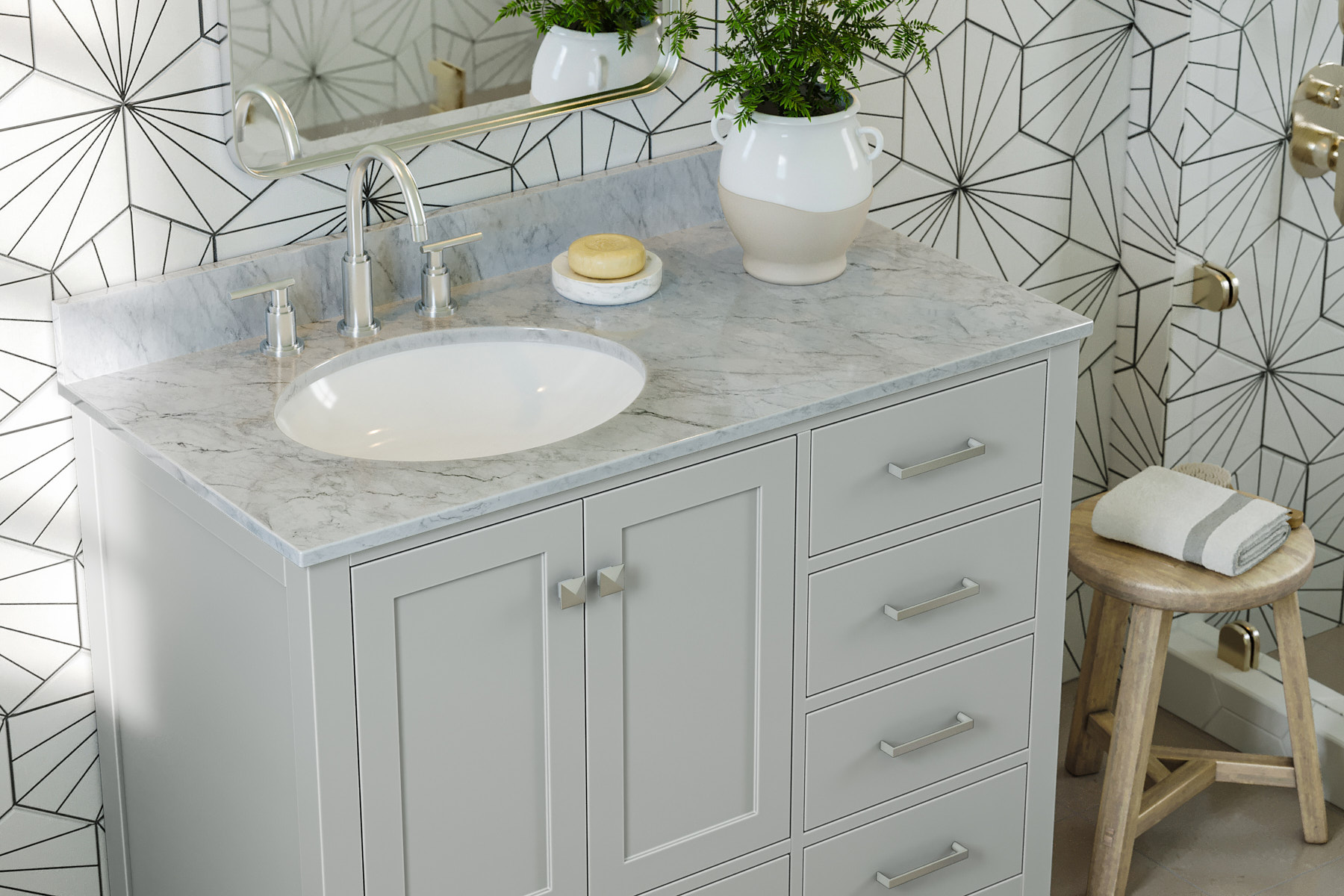
Pair an undermount sink with a sleek, minimalist vanity. Opt for neutral colors like white, gray, or black, and choose streamlined fixtures to maintain a clean look. Consider the ARIEL Cambridge 43" Single Sink Vanity in Gray for a modern, elegant touch.
2. Rustic charm
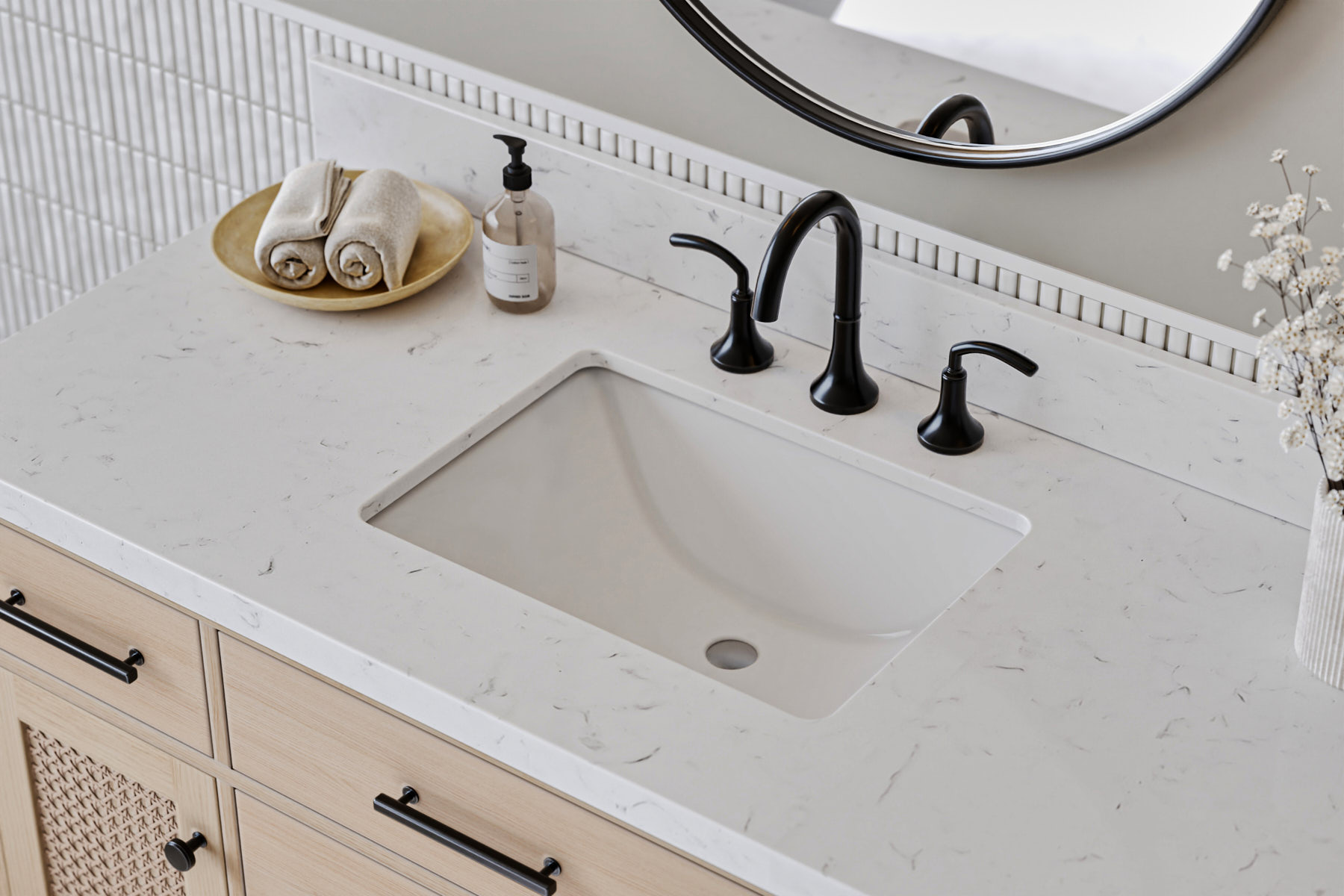
Combine the contemporary look of an undermount sink with a rustic vanity made from reclaimed wood. The contrast between modern and rustic elements can create a unique and inviting bathroom space. The ARIEL Camila 48" Single Sink Vanity in White is an excellent choice for this style.
3. Luxurious elegance
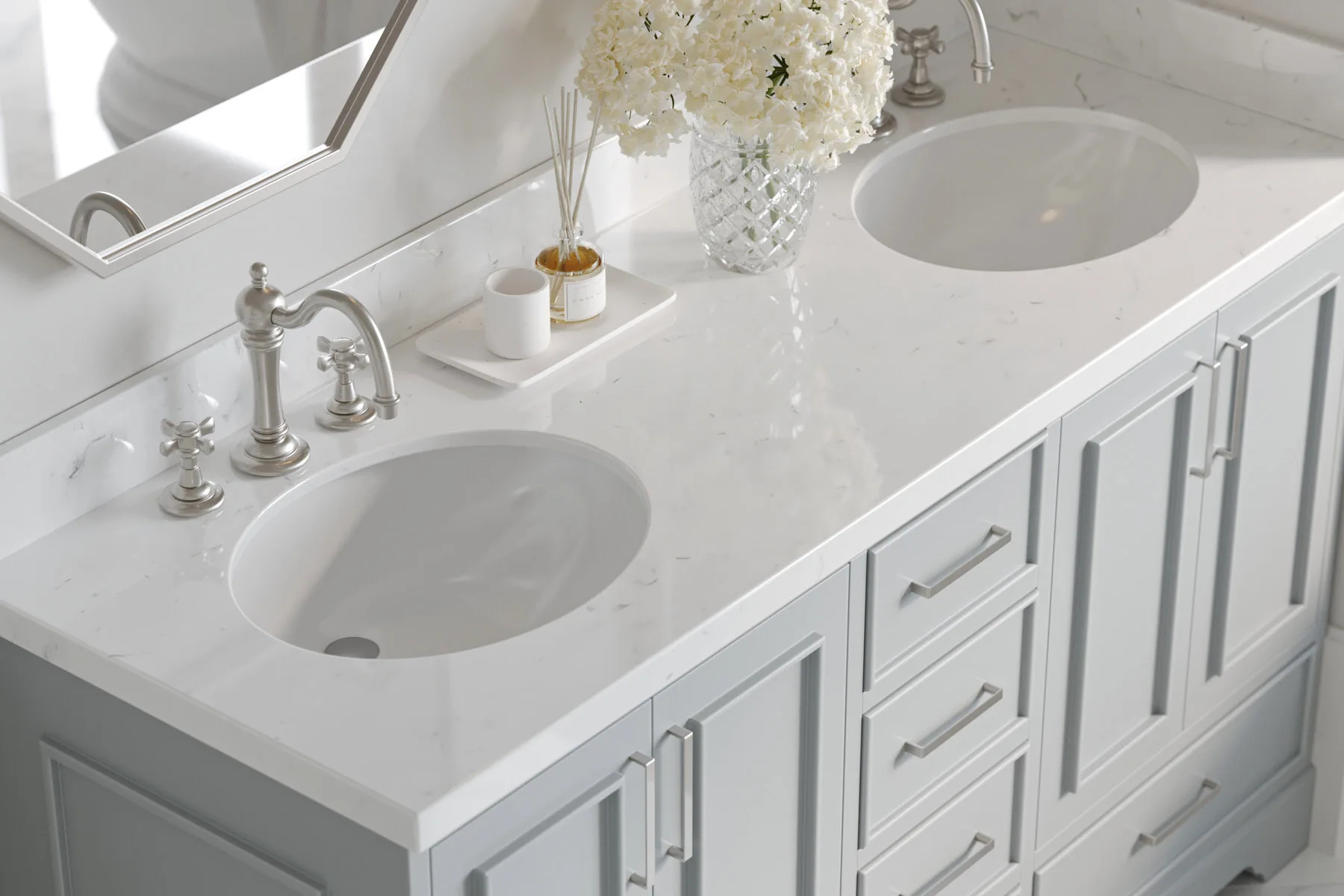
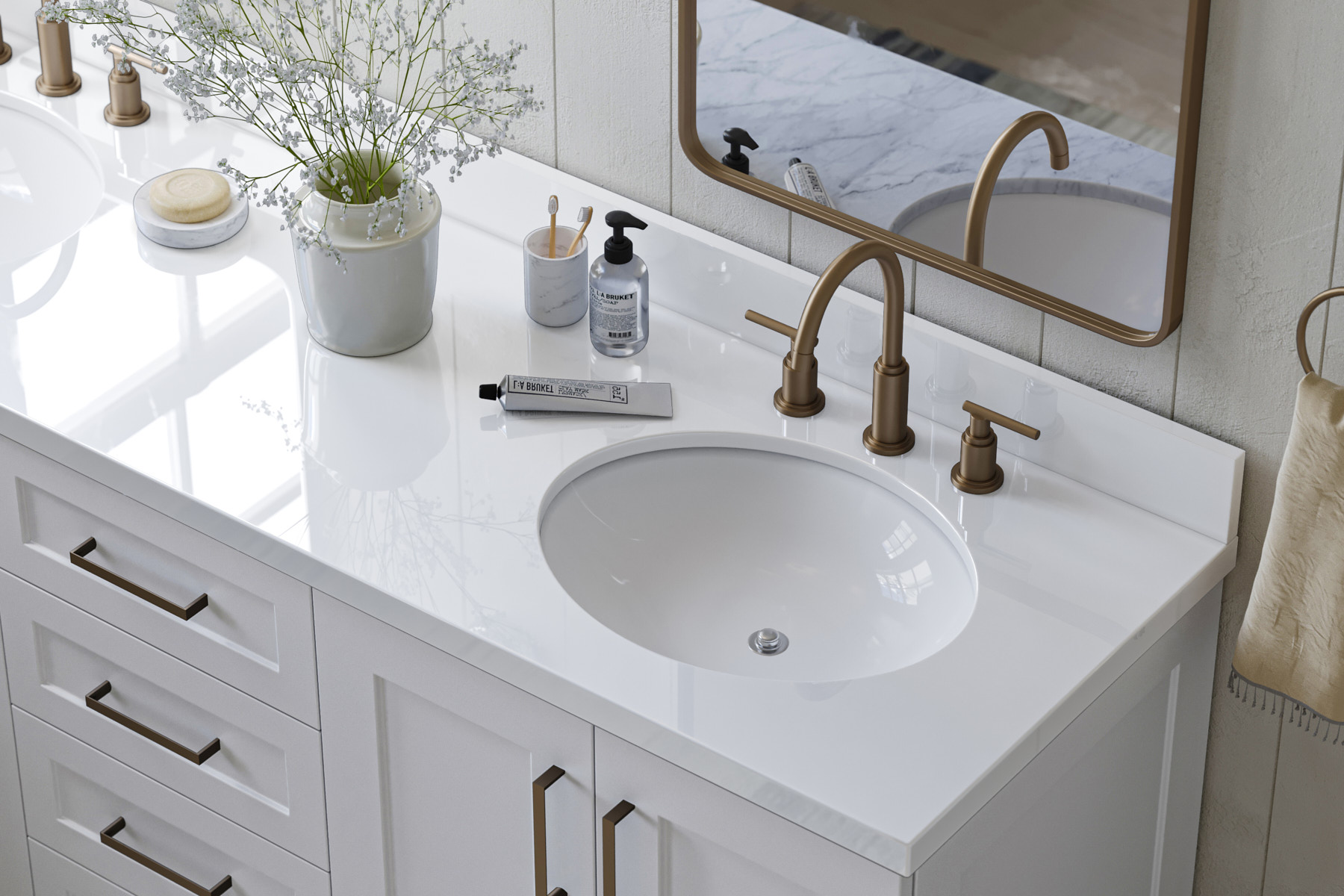
For a touch of luxury, choose a marble countertop with an undermount sink. Gold or brass fixtures can add a sophisticated finish to this elegant setup. The ARIEL Taylor 73" Double Sink Vanity in White offers a luxurious, spacious option perfect for larger bathrooms.
Conclusion
Undermount sink vanities are an excellent choice for anyone looking to enhance the appearance and functionality of their bathroom. Their seamless design, easy maintenance, and sleek appearance make them a popular option in modern bathroom renovations.
Whether you're aiming for a minimalist, rustic, or luxurious look, an undermount sink vanity can help you achieve your design goals.
For more inspiration and to explore our collection of undermount sink vanities, visit ARIEL Bath.
Frequently Asked Questions
-
Q: How can I incorporate an undermount sink into my bathroom design?
ARIEL Bath: To incorporate an undermount sink, choose a compatible countertop material such as stone or quartz. Consider professional installation for a secure fit and enhanced durability. Match your sink with the overall design theme, whether modern, rustic, or luxurious. -
Q: Are undermount sink vanities suitable for small bathrooms?
ARIEL Bath: Yes, undermount sink vanities are ideal for small bathrooms as they provide a sleek, space-saving design. A floating undermount sink vanity can create an illusion of more space and offer practical storage solutions. -
Q: What maintenance is required for undermount sink vanities?
ARIEL Bath: Regular dusting and gentle cleaning are essential. Avoid harsh chemicals to preserve the sink and countertop. Consider applying a sealant to protect against moisture and stains, ensuring longevity and maintaining the vanity’s pristine appearance. -
Q: What are the primary benefits of an undermount sink over a drop-in model?
ARIEL Bath: The standout benefits of an undermount sink center on aesthetics and ease of maintenance. Because the sink mounts completely below the countertop line, it eliminates the traditional raised rim. This creates a clean, minimalist profile that makes cleaning effortless—you can wipe water and countertop spills directly into the basin without any debris getting trapped along an exposed lip. -
Q: How do you prevent support undermount sink problems over time?
ARIEL Bath: To avoid your sink slipping or separating due to weight stress, it must be held by more than just silicone glue. Proper installation requires anchoring heavy-duty undermount clips, wing nut bolts, and nuts directly into pre-drilled threaded holes on the underside of the stone. Allowing the silicone glue to dry completely for 12 to 24 hours before usage ensures a permanent, water-tight seal. -
Q: Are there unique problems with undermount bathroom sinks compared to kitchen sinks?
ARIEL Bath: In a bathroom setting, problems with undermount bathroom sinks are usually tied to chemical exposure rather than heavy pots and pans. Everyday items like nail polish remover, shaving cream, toothpaste, and hair dyes can etch or stain porous stone edges (like marble) if left standing. Regular care with mild soap and prompt wiping of spills keeps the perimeter pristine. -
Q: Is an undermount sink worth the extra investment?
ARIEL Bath: For most homeowners looking for long-term value and elevated design, the answer is yes. While the initial cost of stone cutting and professional installation is higher than a drop-in sink, the undermount sink benefits—such as increased resale value, extra functional counter space, and a timeless aesthetic—make it an excellent investment for a modern bathroom renovation.