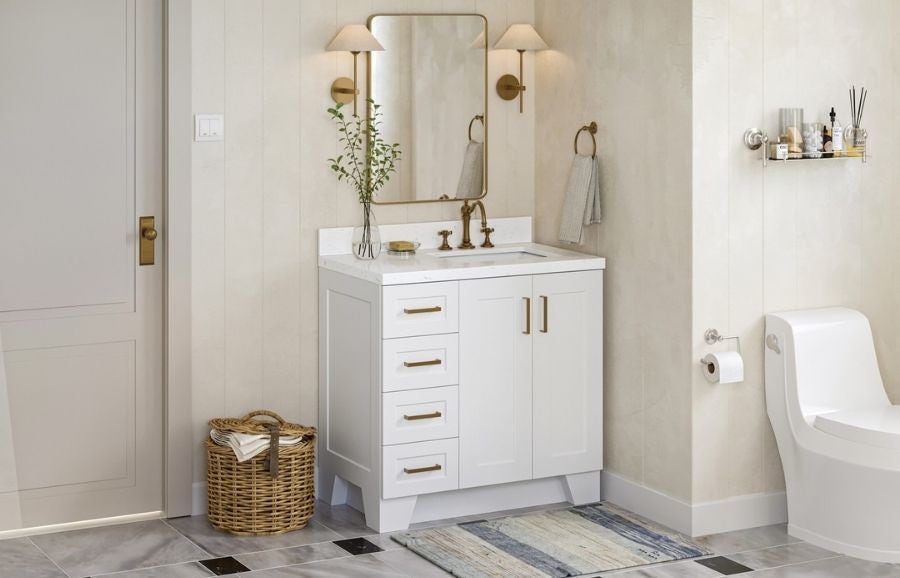
The bathroom is where your everyday routines begin and end. Planning a renovation around transitional design allows you to pair traditional woodwork with modern, clean lines, creating a space that works reliably for years to come.
Discover how to effortlessly pair solid wood vanities, timeless hardware, and smart storage for a clean, enduring transitional style.
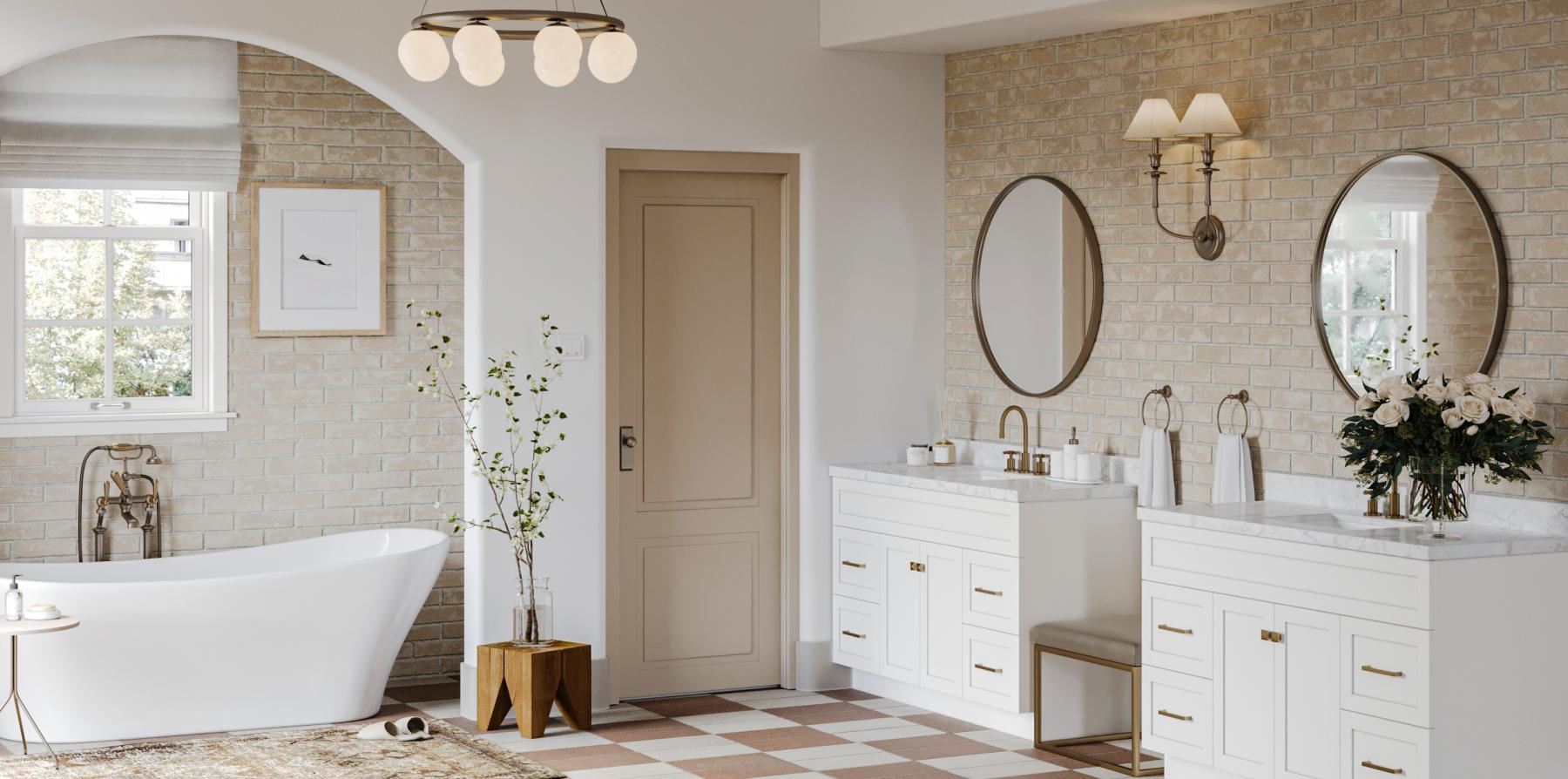
ARIEL Hamlet 55 In. Rectangle Sink Vanity With White Quartz Countertop In White
What Is Transitional Bathroom Design?
Transitional design balances the character of traditional furniture with the simple lines of modern styles. It avoids ornate carving while skipping cold, clinical minimalism. The result is an adaptable aesthetic that fits naturally into most homes without feeling dated as trends change.
The balance between classic and modern
At its core, transitional design takes the warmth and craftsmanship of classic cabinetry, such as recessed panel doors or subtle shaker framing, and pairs it with clean, unvarnished geometry. By stripping away intricate molding while retaining rich wood textures, transitional spaces achieve an inviting, uncluttered feel.
Why transitional style outlasts short-lived trends
Bathroom renovations are significant investments intended to last 10 to 20 years. Trend-heavy aesthetics can quickly feel out of place as preferences evolve. Transitional design focuses on architectural simplicity and natural materials, ensuring your space remains visually balanced regardless of shifting decor trends.
Step 1: Laying the Groundwork for Your Renovation
Before purchasing materials, establish a clear plan to keep your project on schedule and within your budget.
1. Setting an honest budget
Unplanned expenses happen during plumbing updates or structural work. Establishing a complete budget early helps you make responsible purchases without compromising on core components like solid wood cabinets or quality counter stone.
2. Evaluating layout and spatial function
Look at how your family uses the room every day. Determine if your current layout provides enough clearance for doors to open fully, if two people need simultaneous sink access, and where storage is lacking.
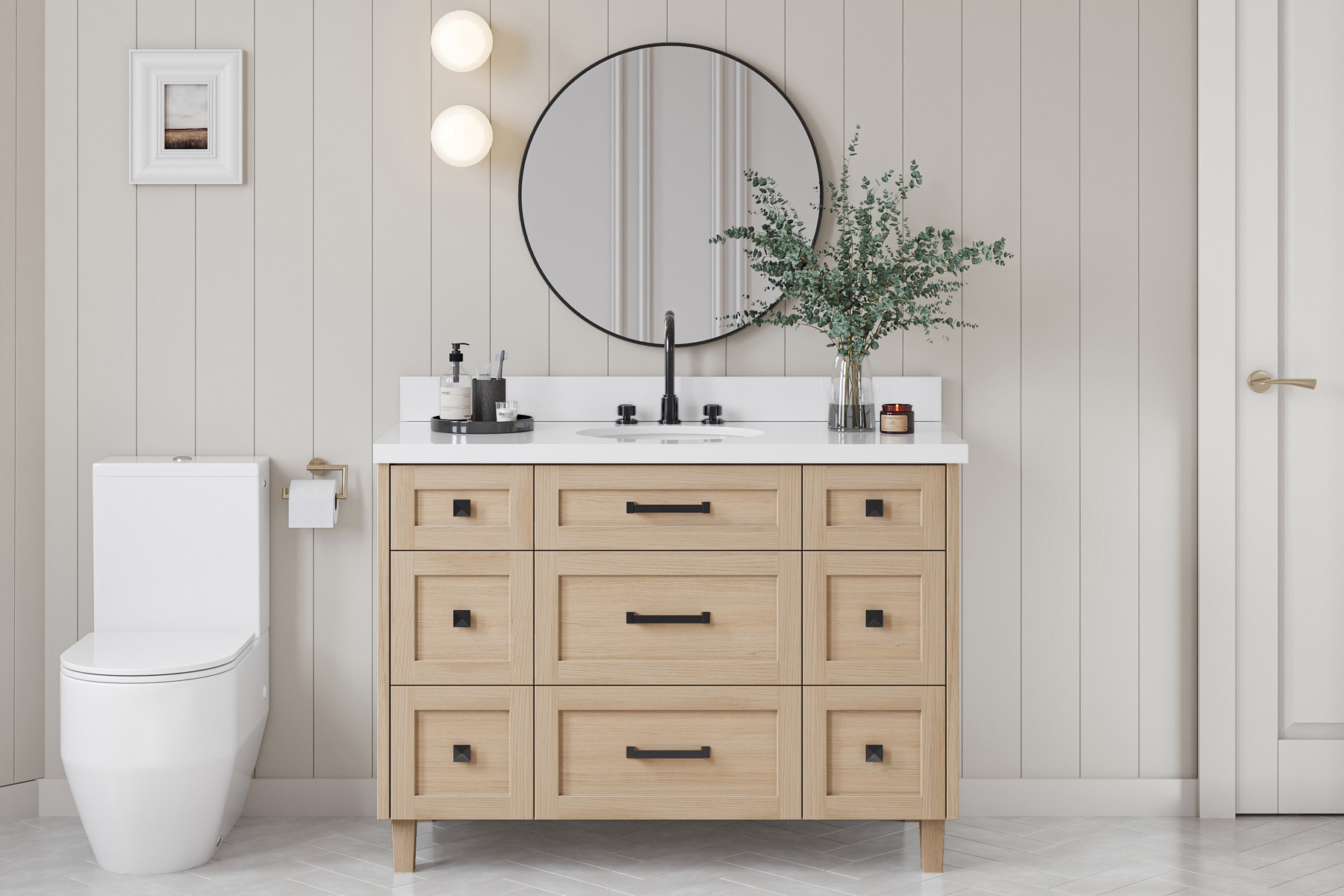 ARIEL Monroe 49 Inch Single Oval Sink In Oak
Step 2: Selecting Materials Built for Daily Use
Bathroom materials must handle moisture, temperature changes, and constant daily handling.
-
Water-resistant flooring
Porcelain tiles provide strong water resistance and durability. They can replicate natural stone or wood textures while standing up to heavy foot traffic and standing water.
-
Low-maintenance countertops
Quartz countertops consist of natural stone bound with resin, creating a non-porous surface that resists staining without requiring periodic sealing. Marble offers natural variation and classic appeal, though it requires routine sealing every 2 to 3 years to maintain its barrier against acidic spills.
-
Solid wood cabinetry and hardware
Cabinets engineered from solid wood and real wood veneers handle humidity better than particleboard. Details like dovetail joinery provide structural strength at stress points, ensuring drawers remain square over years of daily opening and closing.
Our transitional cabinetry lines, including the Cambridge, Taylor, Hamlet, Bayhill, Bristol, and Monroe collections, use solid wood framing, soft-close hardware, and practical interior storage configurations.
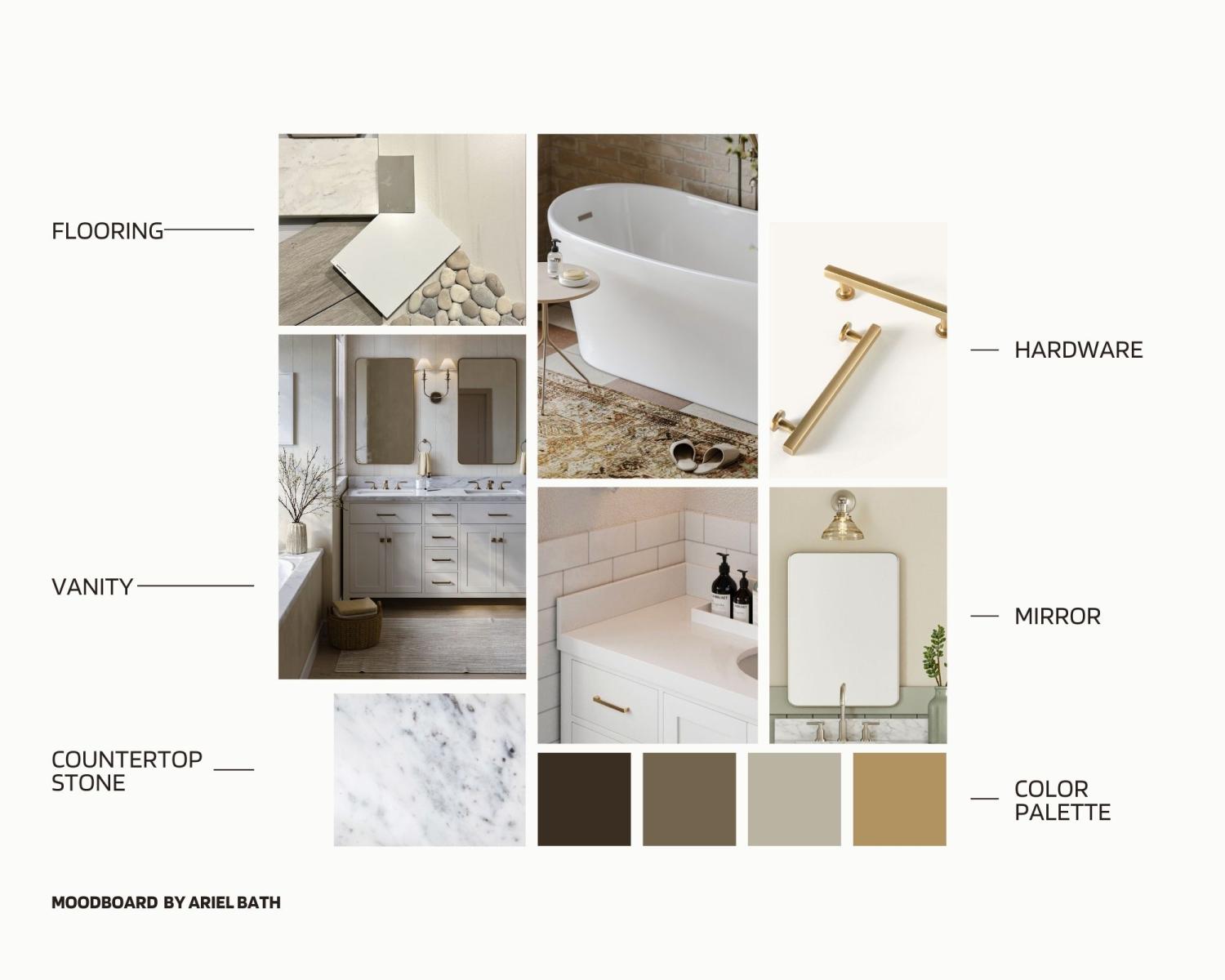
ARIEL Bath’s Categories: Vanities | Countertops | Bathtubs | Mirrors | Undermount Sinks | Accessories
Step 3: Choosing Practical Fixtures
Fixtures should simplify your morning routine while offering long-term reliability.
1. Undermount sinks and faucets
Undermount porcelain sinks sit beneath the countertop surface, eliminating the raised rim where grime collects. Wiping down counters becomes a simple, one-motion task.
2. Bathtubs and showers
Select a tub or shower setup based on how you live. A simple drop-in or freestanding tub provides a reliable soak, while a tiled shower stall with simple glass doors maximizes floor space in smaller bathrooms.
3. Functional lighting and mirrors
Proper lighting reduces shadows around the vanity area. Pair clean, wall-mounted sconces with simple framed mirrors to improve visibility during morning prep.
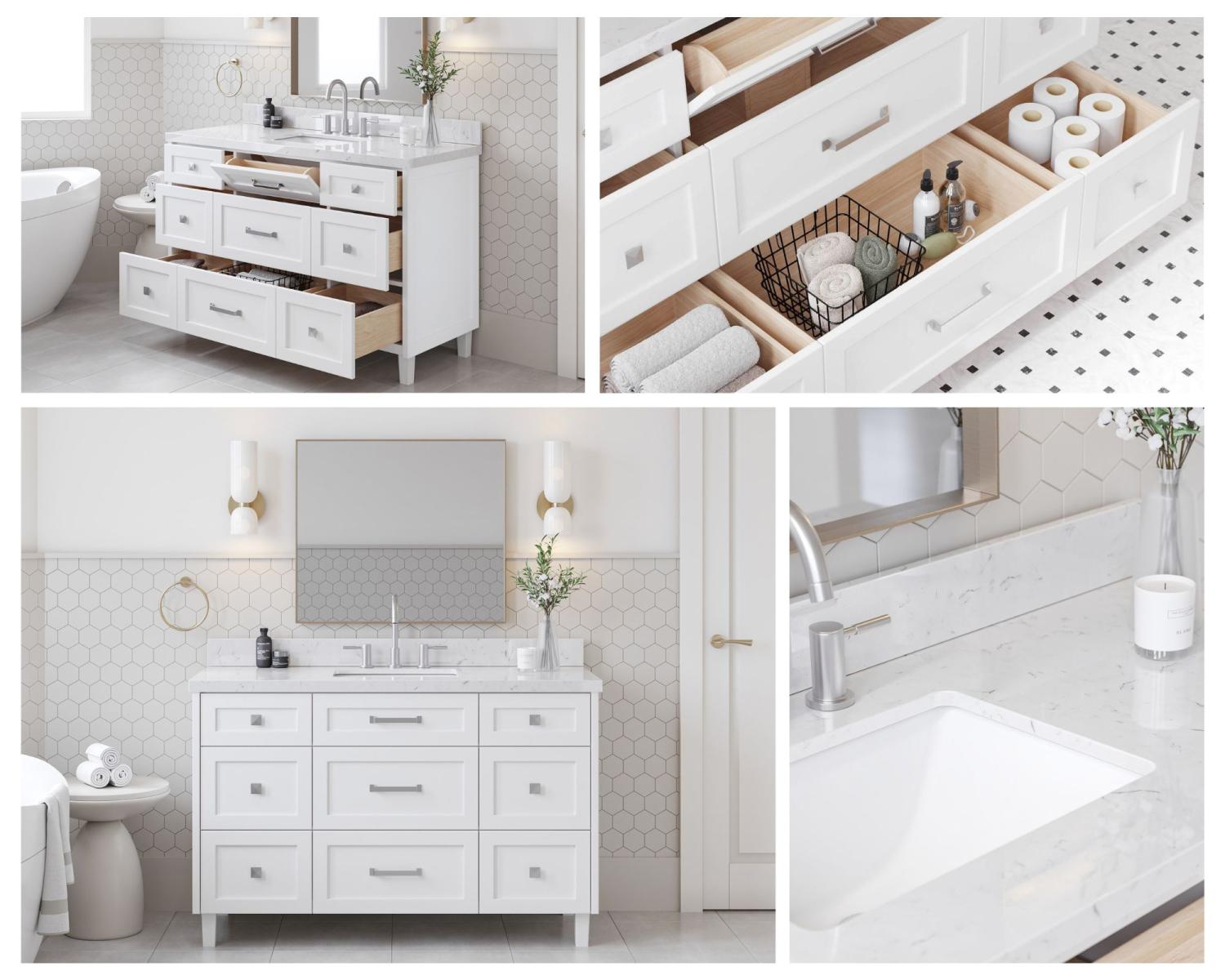
ARIEL Monroe 54 Inch Single Rectangle Sink In White
Step 4: Simple Finishing Touches
Keep decorative choices functional:
-
Neutral wall colors: Shades of off-white, beige, or soft grey reflect light and provide a clean backdrop for natural wood finishes.
-
Absorbent textiles: Quality cotton towels add texture and comfort without cluttering the room.
-
Simple hardware: Matte black, brushed nickel, or satin brass pulls provide subtle contrast against painted or stained cabinets.
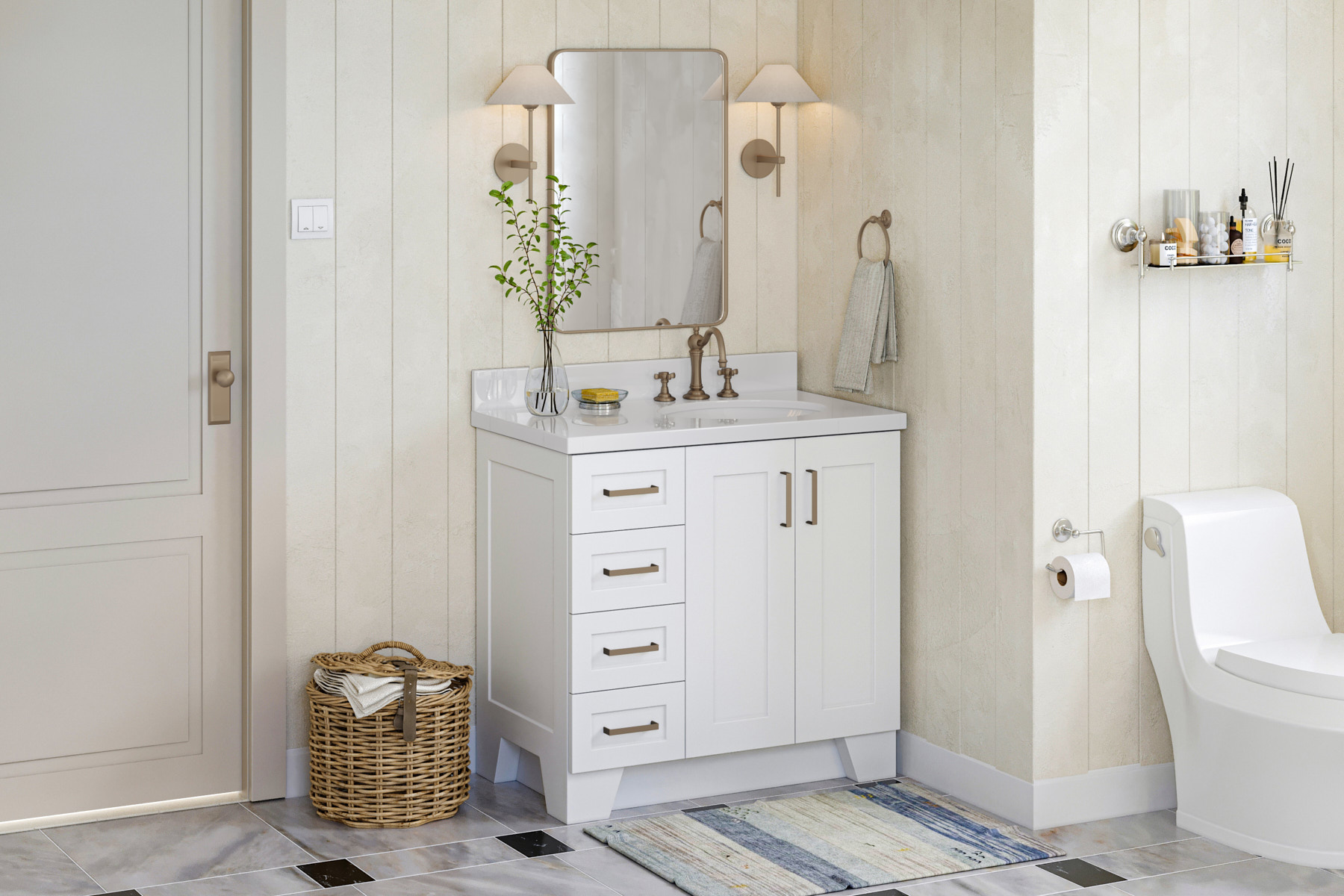
ARIEL Taylor 37 In. Right Offset Oval Sink In White
Step 5: Storage and Efficiency Features
Clutter creates friction in daily routines. Incorporating smart storage keeps surfaces clear:
-
Interior drawer organization: Built-in dividers keep small items in place.
-
Full-extension drawers: Drawers that open completely give you immediate access to items stored in the back.
-
Water-saving fixtures: Low-flow faucets and toilets reduce water consumption without sacrificing pressure.
|
Material |
Primary benefit |
Maintenance requirement |
Ideal application |
|
Solid Wood & Plywood |
Handles humidity and weight without sagging |
Wipe clean with a damp cloth; avoid harsh chemicals |
Cabinet framing and vanity bases |
|
Quartz Countertops |
Non-porous surface resists stains and bacteria |
Soap and warm water; no sealing required |
High-traffic family bathrooms |
|
Carrara Marble |
Authentic natural stone patterning |
Periodic sealing every 2–3 years; prompt spill cleanup |
Primary suite vanities |
|
Porcelain Tile |
Extreme water and scratch resistance |
Regular sweeping and standard floor cleaning |
Bathroom floors and shower walls |
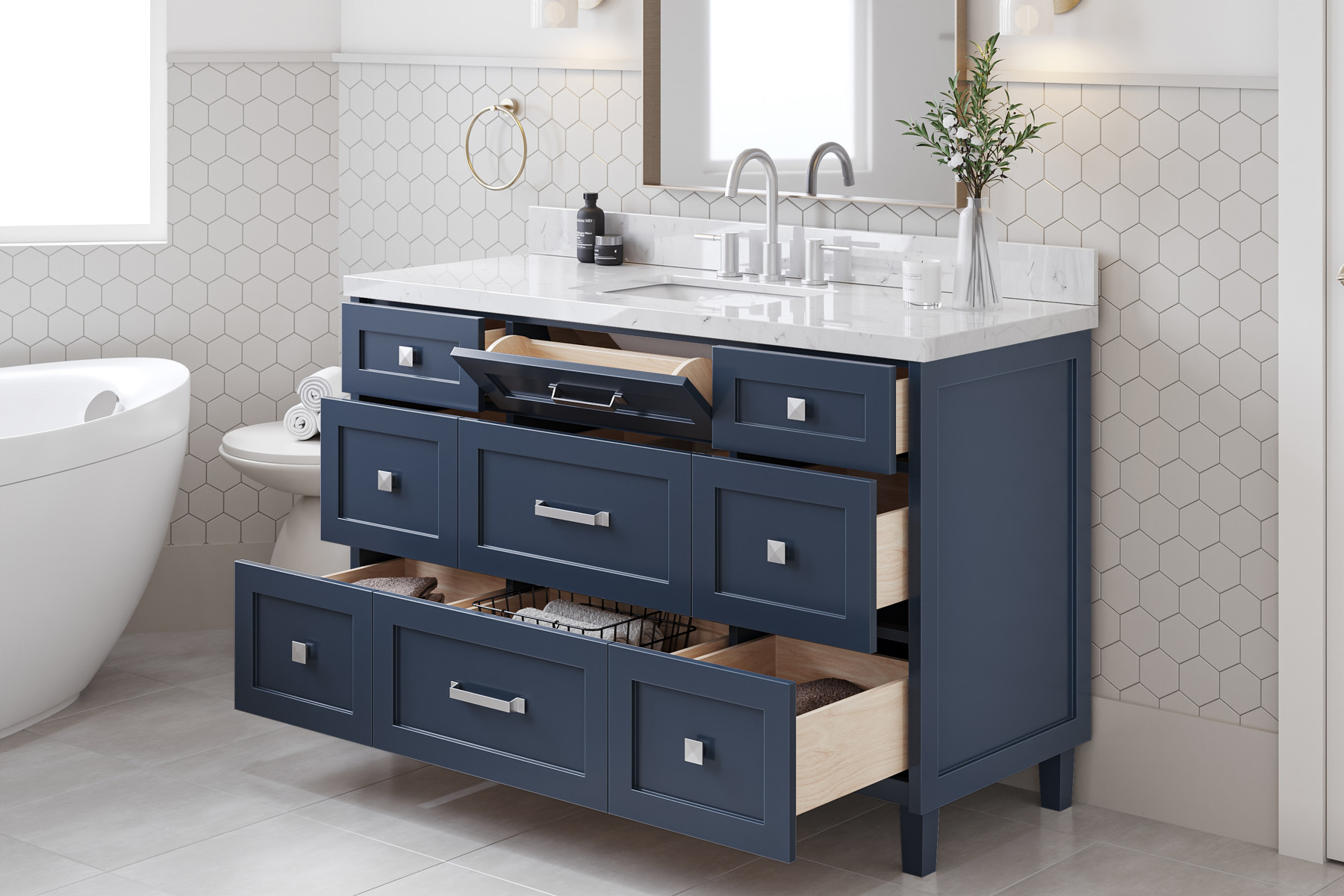
ARIEL Monroe 54 Inch Single Rectangle Sink In Midnight Blue
Wrapping It Up
A transitional bathroom combines the best of both worlds, blending the comfort and richness of traditional design with the simplicity and sleekness of modern aesthetics. It's about creating a space that is timeless, functional, and, most importantly, a serene retreat from the hustle and bustle of everyday life.
Remember, the key to a successful renovation is planning carefully, making informed choices, and never compromising on what makes you feel at peace.
Frequently Asked Questions
-
Q: What is a transitional bathroom?
ARIEL Bath: A transitional bathroom balances classic traditional design with clean modern lines. It combines the warmth of traditional woodwork, like shaker doors, with geometric profiles, neutral tones, and streamlined fixtures to create an uncluttered, adaptable space. - Q: What defines a transitional bathroom vanity?
ARIEL Bath: A transitional vanity features clean-lined cabinetry, such as slim shaker doors, paired with modern hardware. It uses durable construction methods, including solid wood frames and dovetail joinery, for long-term stability against humidity. - Q: What materials are best for transitional vanities?
ARIEL Bath: The best transitional vanities pair solid hardwood or high-grade plywood cabinet frames for moisture resistance with durable pure white quartz or Italian Carrara marble countertops. Complete the design with subtle pulls in satin brass, matte black, or brushed nickel for balanced contrast without ornate detail. - Q: What are some practical transitional bathroom design ideas for layout and storage?
ARIEL Bath: Prioritize functional storage with full-extension, soft-close drawers and undermount porcelain sinks that keep countertops clear and easy to clean. Complement natural wood or neutral cabinetry with soft wall tones and balanced hardware contrast in matte black or satin brass. - Q: How do transitional vanities differ from traditional or modern minimalist styles?
ARIEL Bath: Transitional vanities simplify traditional styles by swapping heavy moldings and ornate carvings for clean shaker profiles and crisp quartz tops. Unlike cold modern minimalist designs, they bring warmth and texture into the bathroom through real wood finishes and simple hardware.